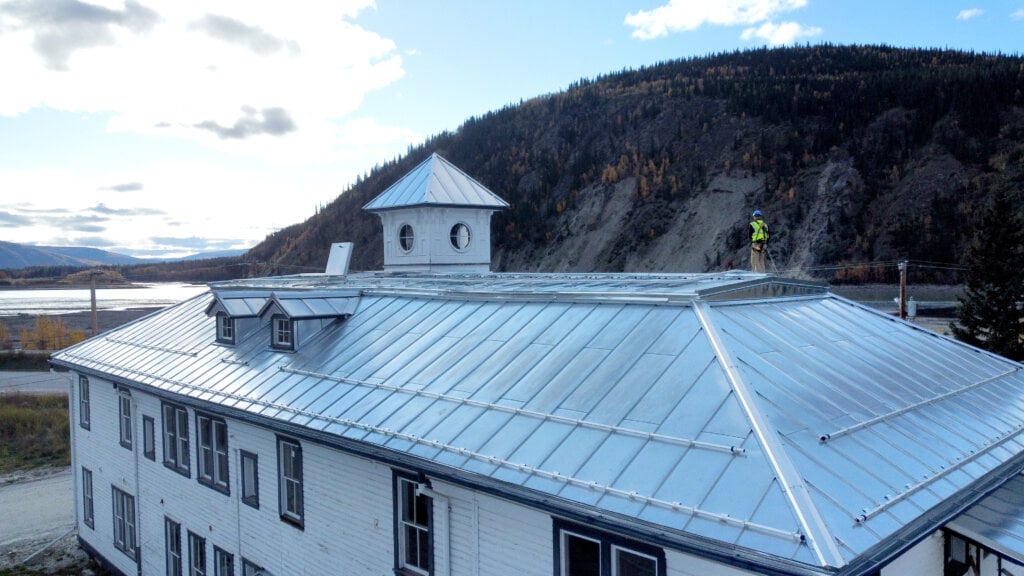
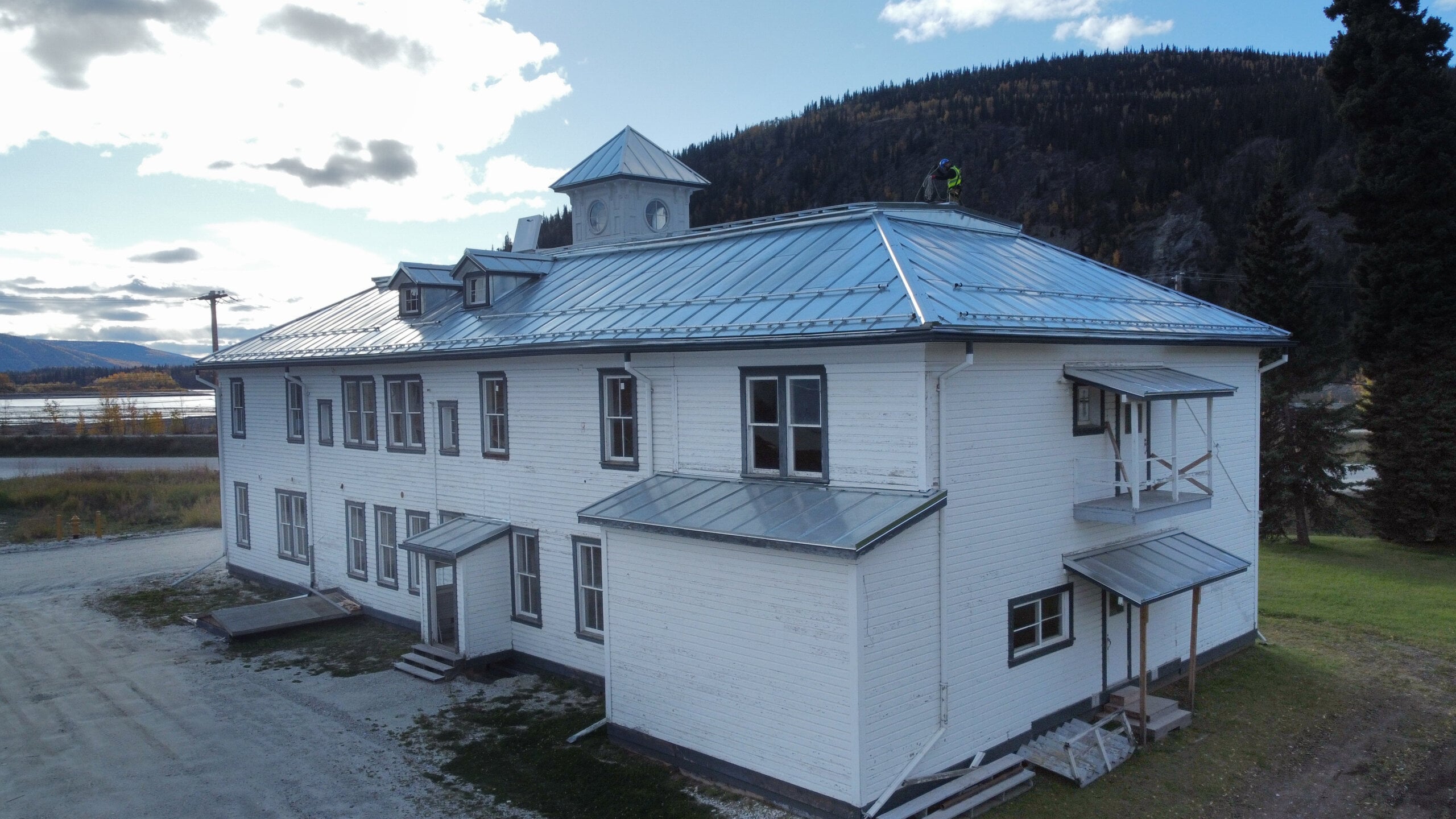
Built in 1901, the Former Territorial Court House is a handsome, two-story, wood-frame building, prominently located within the Dawson Historical Complex, a designated National Historic Site, in the Yukon Territory of Canada. Historically associated with the establishment of a federal presence in the Northwest and the assertion of Canadian sovereignty, this rare turn-of-the-century courthouse is one of only two early territorial courts remaining in Western Canada. In 1967, it was acquired by the Canadian Parks Service.
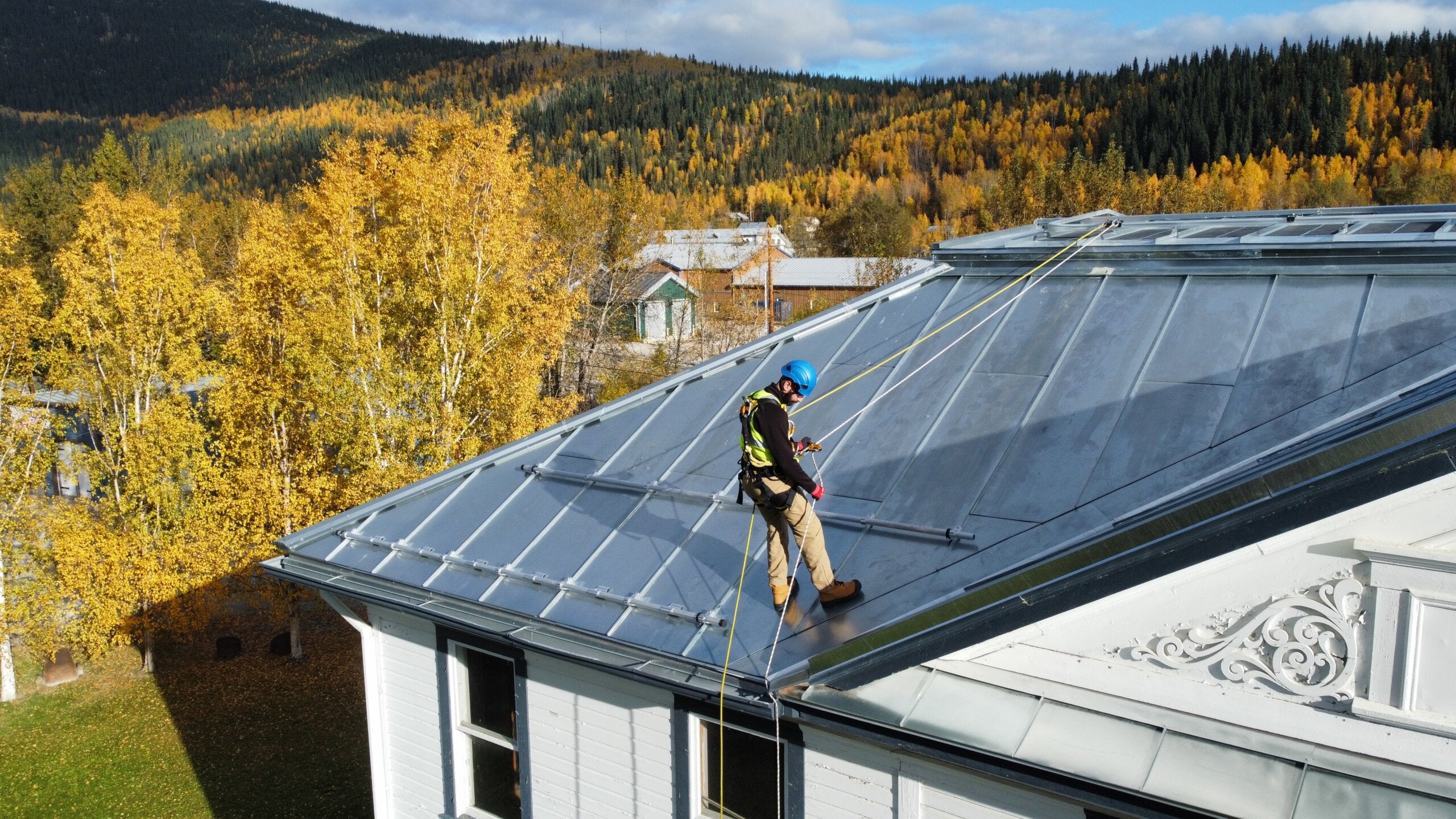
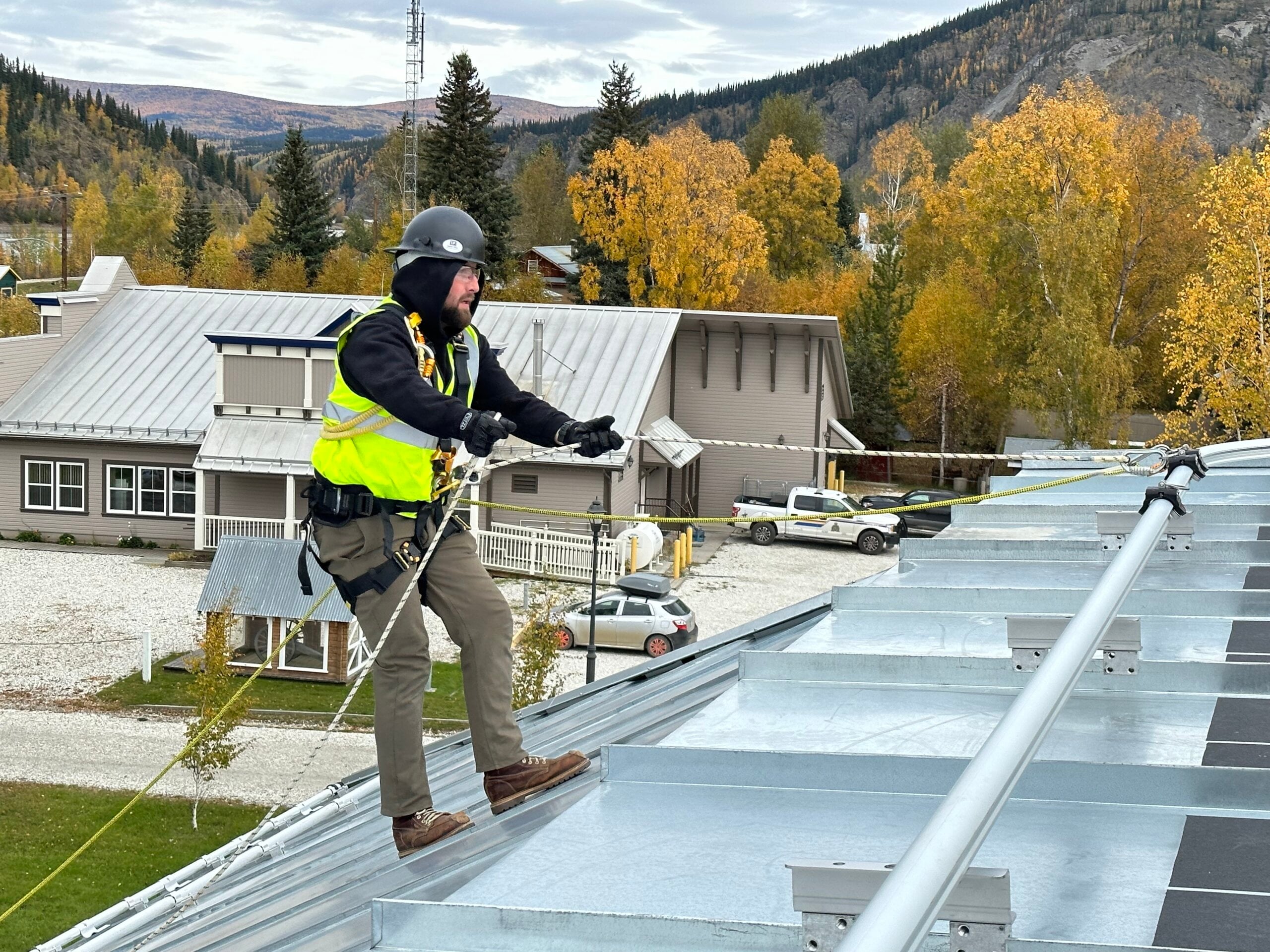
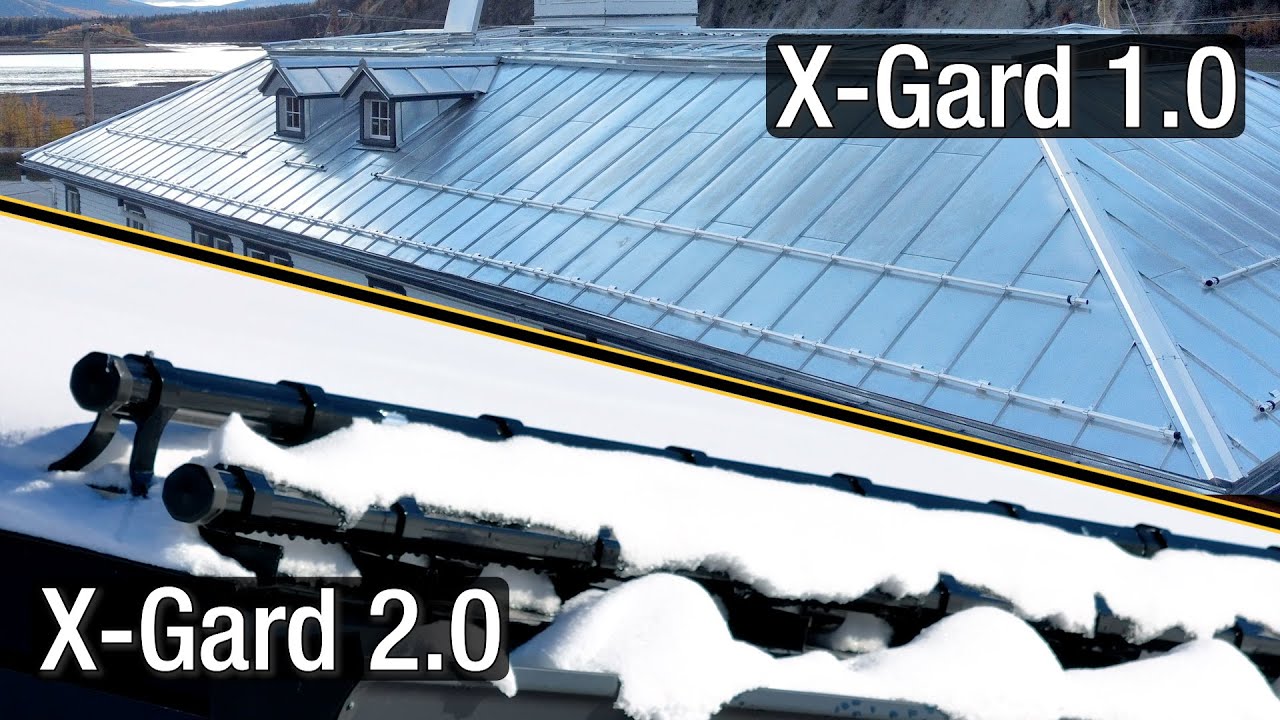
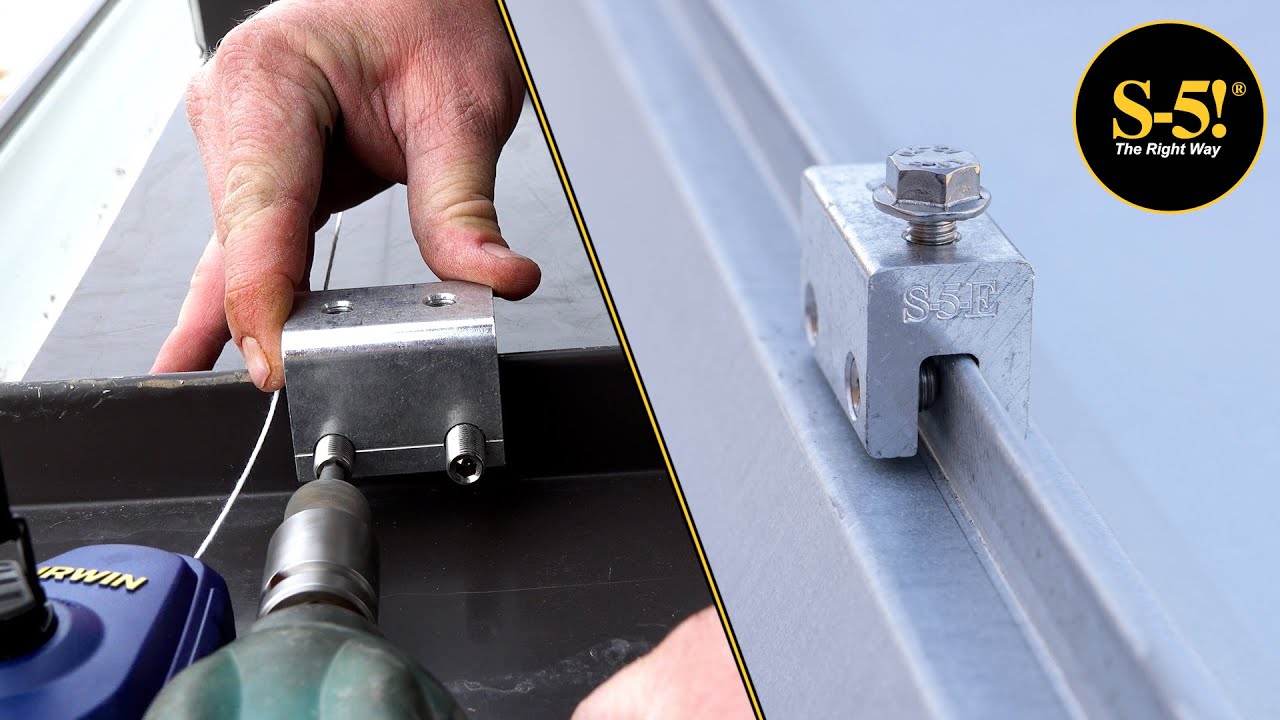
Throughout the years, the building has required many modifications. In 2023, the Parks Service determined a new roof was required and selected a 26-gauge, double-folded mechanical lock standing seam metal roof, which was rollformed on-site. To ensure life safety, the project features S-5! X-Gard 1.0 snow retention and Fallprotec SecuRail Pro fall protection together with S-5-V clamps.
Due to the historical nature of the project, the particulars of the new metal roof, and the area’s considerable snow loads, the contractor needed a penetration-free, fully engineered, aesthetically pleasing snow retention solution designed and engineered to last the life of the roof. Also, any fall protection system in snow country must be protected with snow retention to prevent it from snow avalanche danger.
Located 265 kilometers (165 miles) south of the Arctic Circle, Dawson is subject to considerable snow loads. The courthouse required a snow retention system that could restrain snow loads of 50.5 pounds per square foot – one that would not penetrate the roof and maintain a pleasing aesthetic.
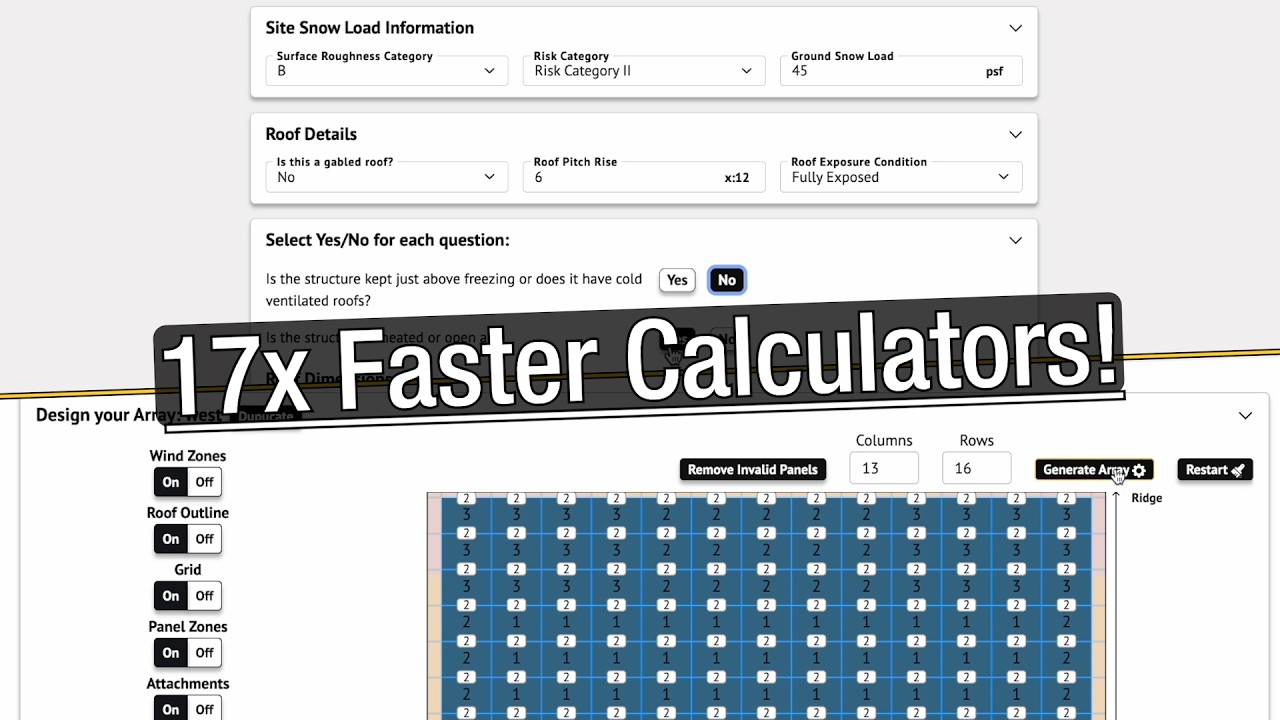
The roofline geometry is uniquely complex, featuring two different slopes (primary roof is 7:12), dormers, and a cupola together with the wide seam spacing of 70.5 centimeters (27.75 inches), which required engineering two rows of snow retention. In general, a steep slope roof like this would make it difficult to install snow retention because contractors could not safely walk on the roof without scaffolding, lifts or fall protection. Given this was a government building and a historical site, there were more stringent requirements for the roof project, including a higher level of engineering, documentation and professionally engineered stamped drawings.