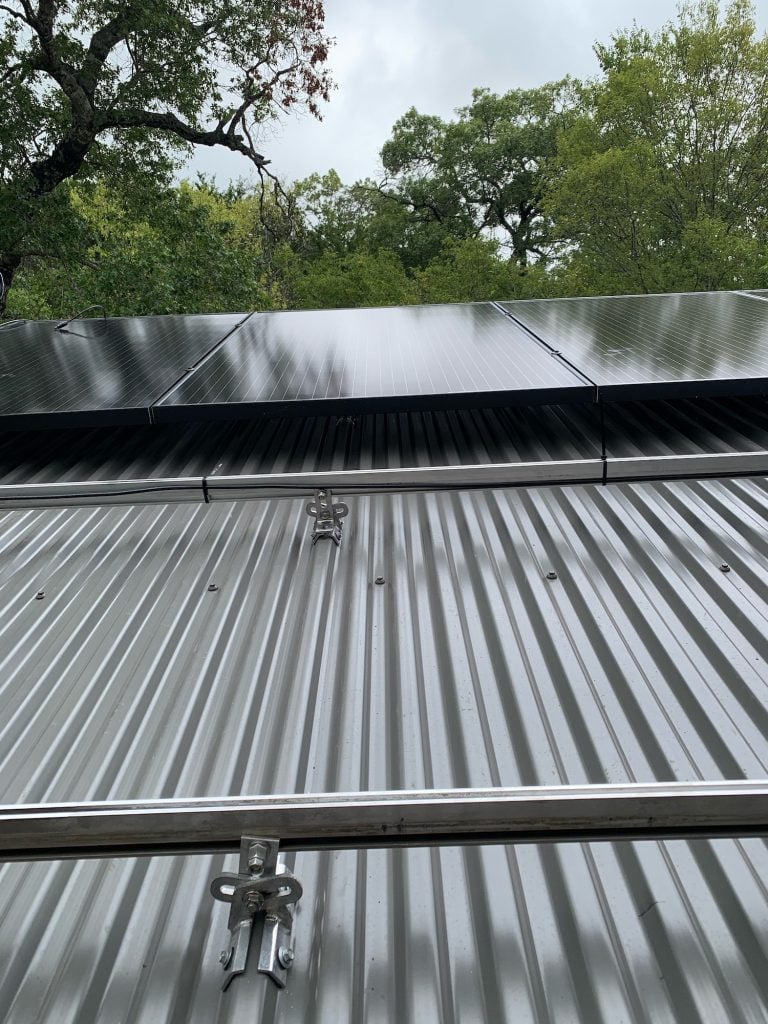
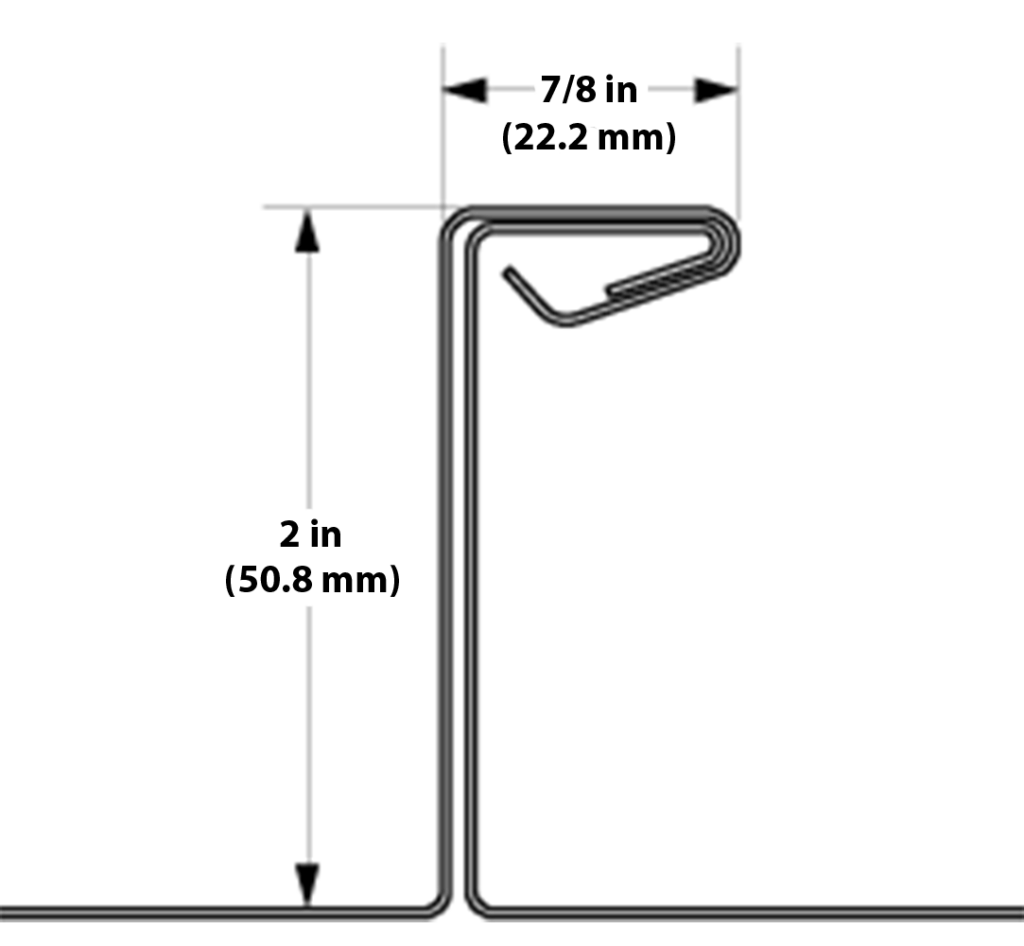
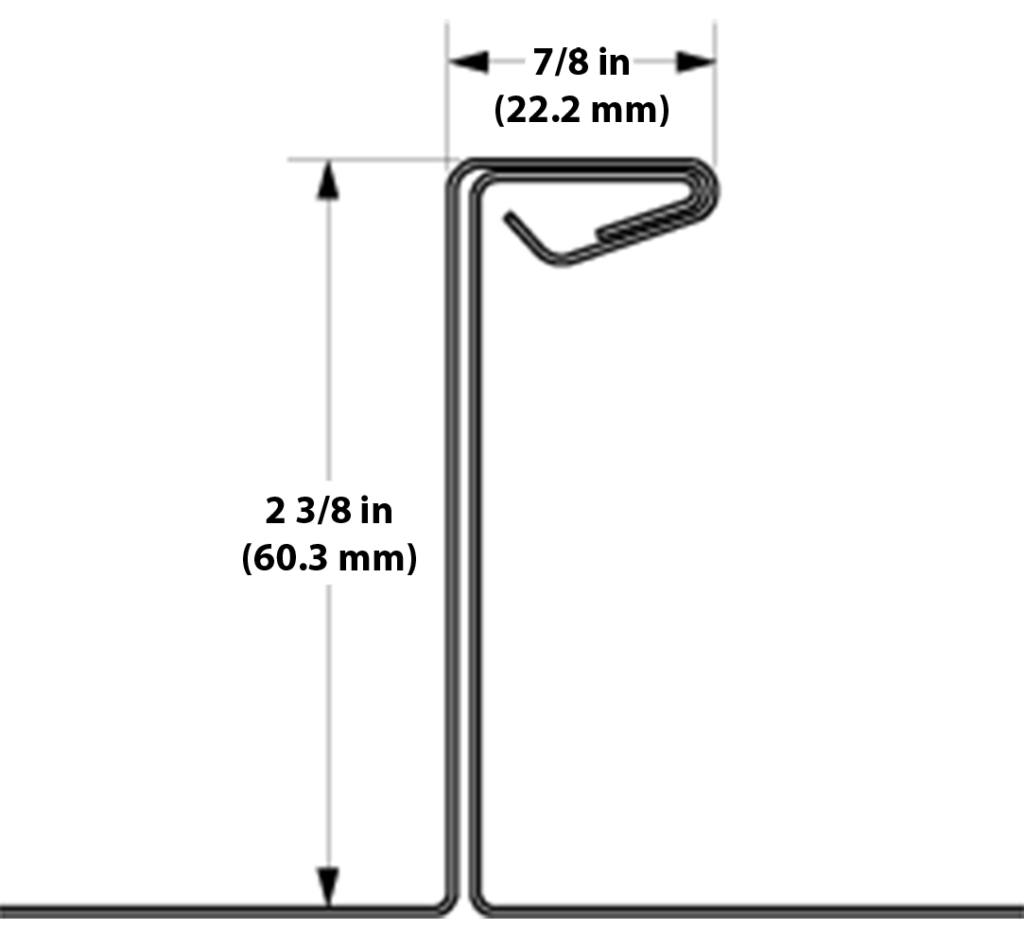
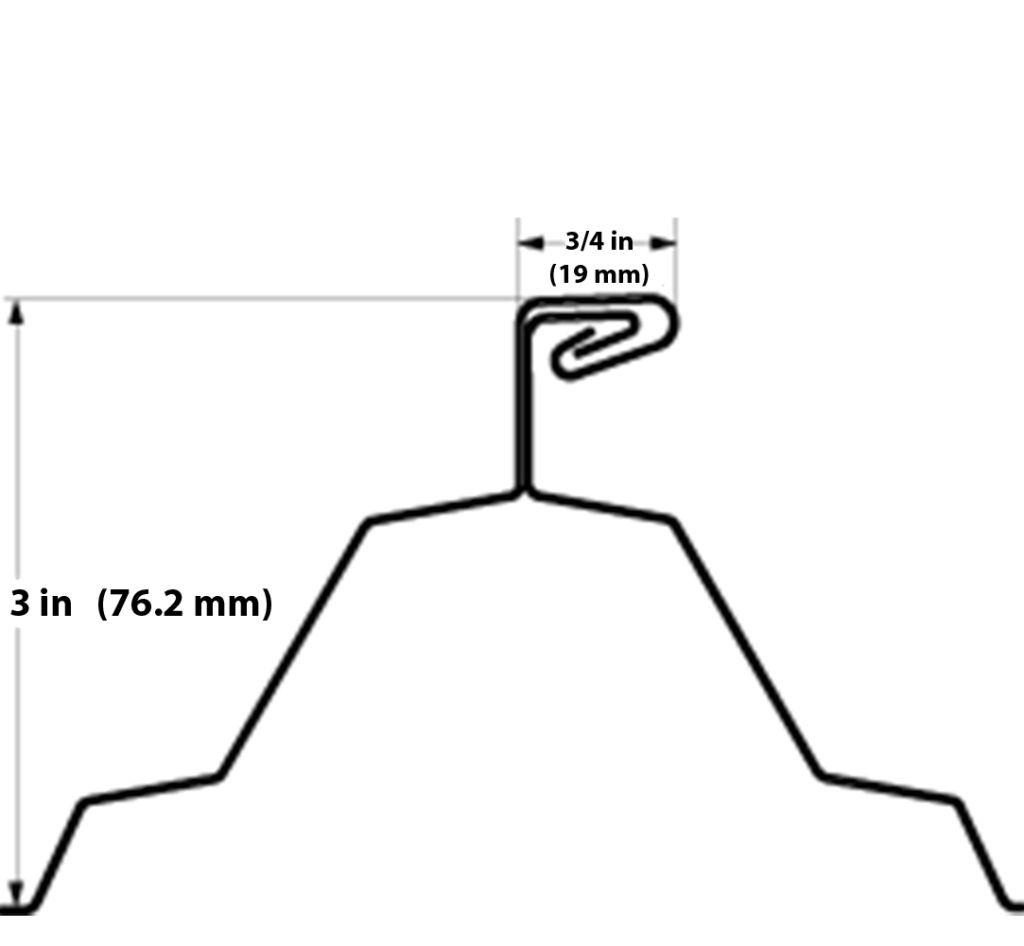
The S-5-H clamp (“H” is for Horizontal seam) is designed to accommodate horizontal seams that are not fully closed. The setscrews are side-install rather than top-down. When the seam is horizontally-oriented but completely closed, the S-5-H90 clamp is a more economical solution (top-down setscrews).
This clamp design allows attachment anywhere along the seam and fitment over wider horizontal seams.
Minis Available
The H Mini clamp is a more economical solution for lighter-duty attachments where Herculean holding strength is not required.
The H Mini clamp is a bit shorter than the standard H with one setscrew rather than two.
All standard and Mini clamps undergo rigorous load testing. Negative load normal-to-seam testing (pull-up) is performed on all Mini clamps, and parallel-to-seam testing (drag load) is performed on all standard clamps.
Be sure to check out the many other features on the clamp overview page.
Standing Seam
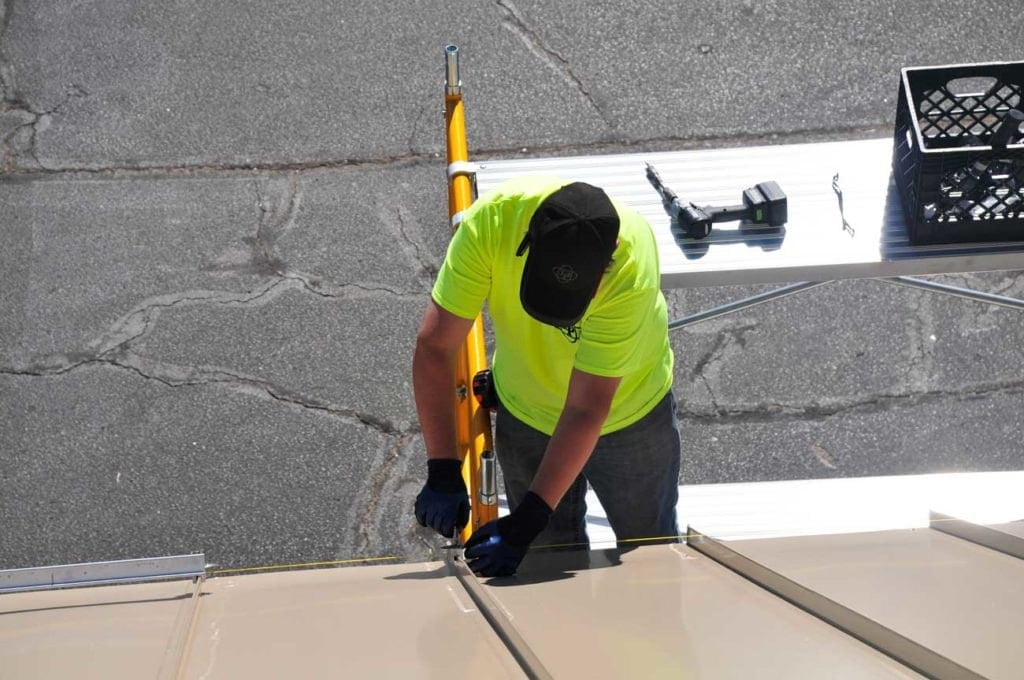
Installation is as simple as placing the clamp on the seam and sliding the insert into place. Tighten the round point Torx Drive (T30) setscrews to the specified tension. Then, affix ancillary items using the bolt (provided with standard H clamp; sold separately for the H Mini).
*See more detailed installation instructions in the PDF download below.
*S-5! clamps may be moved in the event of initial misplacement. However, due to the ensuing oxidation process which acts as a natural thread lock, we can express no opinion to the performance of a clamp once it has been removed and reinstalled or the ability to remove the clamp after this process has occurred.
Submit your information by clicking the form below, and we’ll get back to you as soon as possible.
The answer to this question varies with the load direction, the seam profile, the roof material and the clamp model.
These variables result with a wide range of holding capacities from ±300 lbs (235 kg) to ±4,000 lbs (1800 kg). This is why for critical applications it is important to correctly identify the roof panel, seam type, gauge, etc along with the recommended seam clamp for the specific roof. [ link-- Clamp-to-seam tool] When used on some “applied cap” architectural type seam styles, S-5! may yield low load-to-failure results as compared with integrated seam profiles. Always check our load table to verify the correct allowable holding strength on your specific roof type. Read more about our testing.
The setscrews, which make a small dimple in the panel seam, optimizing holding strength, are normally tensioned to 115 inch-pounds for test purposes. This is because the tools normal to the trade are rated at this tightening torque. But there are some exceptions to this rule. On some profiles and gauges in steel, screw tension of 115 inch-pounds will not adequately dimple the panel seam. For this reason, some tests are run with higher screw tensions on profiles with increased gauge or thickness.
The appropriate setscrew tension is always published on installation instructions for every clamp. When the tested torque is 115 in. lbs. the recommended installation torque instructs a window between 130 to 150 in. lbs. to be sure the tested torque is reached. When test torque is higher, the corresponding window is also higher.
For horizontal seams with .5″ (13 mm) or less dimension of folded portion:
For horizontal seams greater than .5″ (13 mm) and less than .625″ (16 mm) dimension of folded portion: Use the S-5-T.
For horizontal seams greater than .65″ (16 mm)
For horizontal seams less than .65″ you may also crimp the seam as shown above for the S-5-E.
All S-5! clamps undergo rigorous mechanical tensile load testing. We typically test in two load directions: Negative load normal-to-seam testing (pulling-up), and parallel-to-seam testing (drag load). We actually developed these test protocols back in 1992 as ASTM has no prescribed test procedures for this type of testing. For more on our testing protocols and results, visit this link and check out our video.