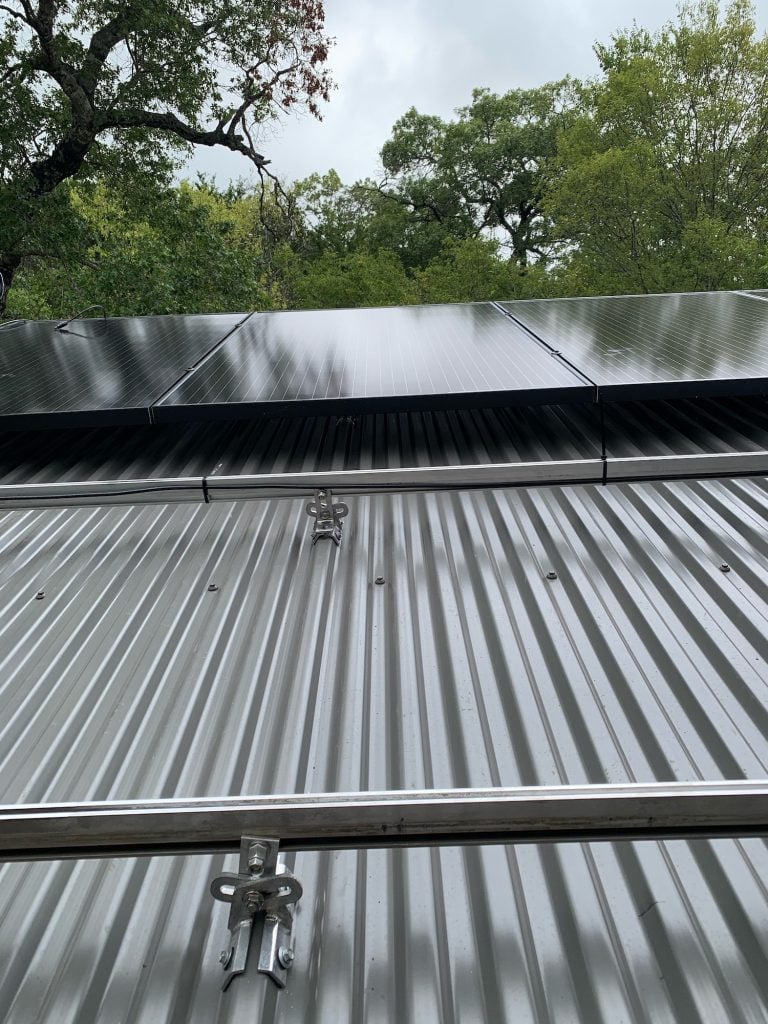
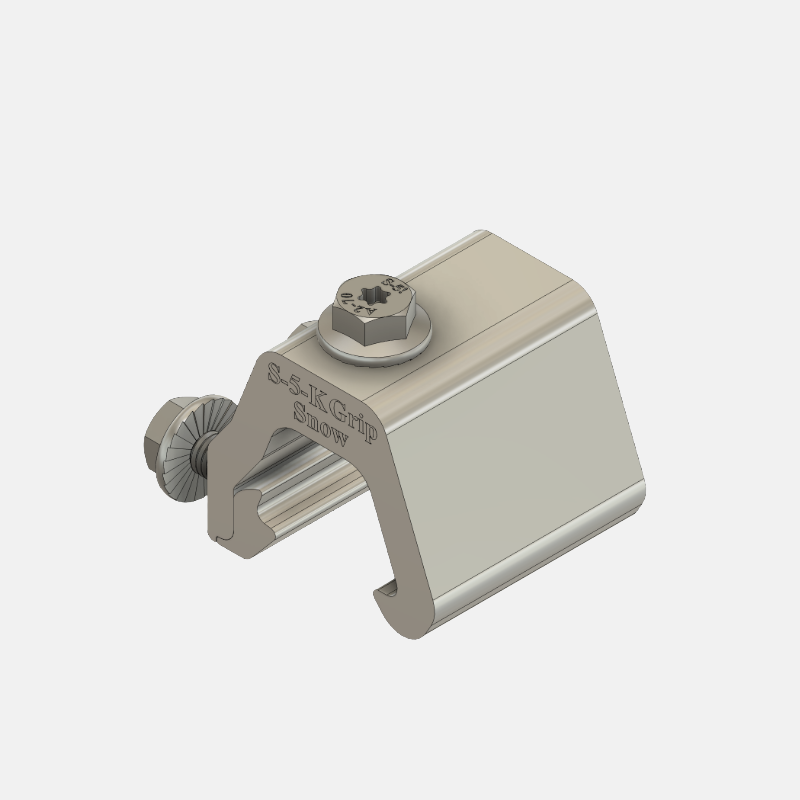
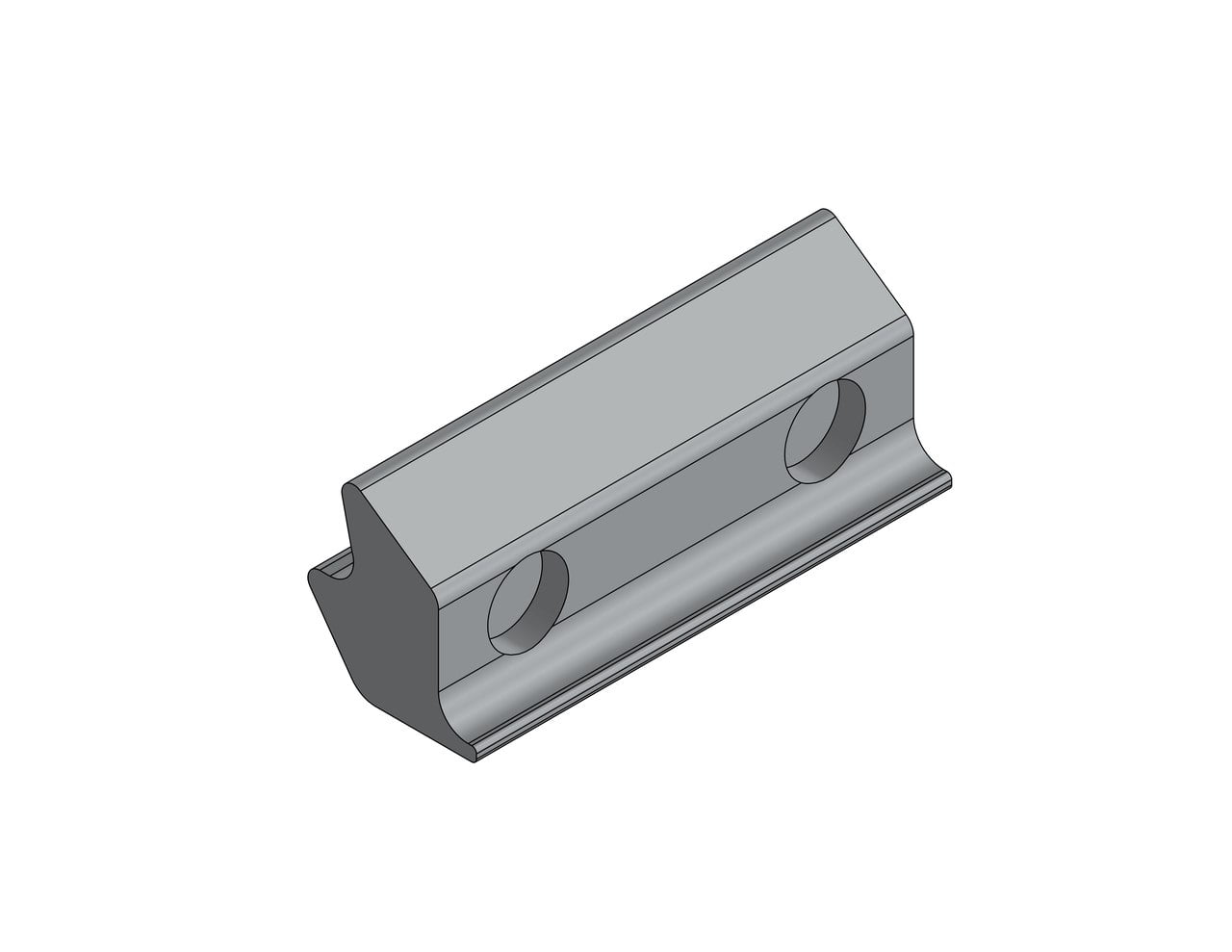
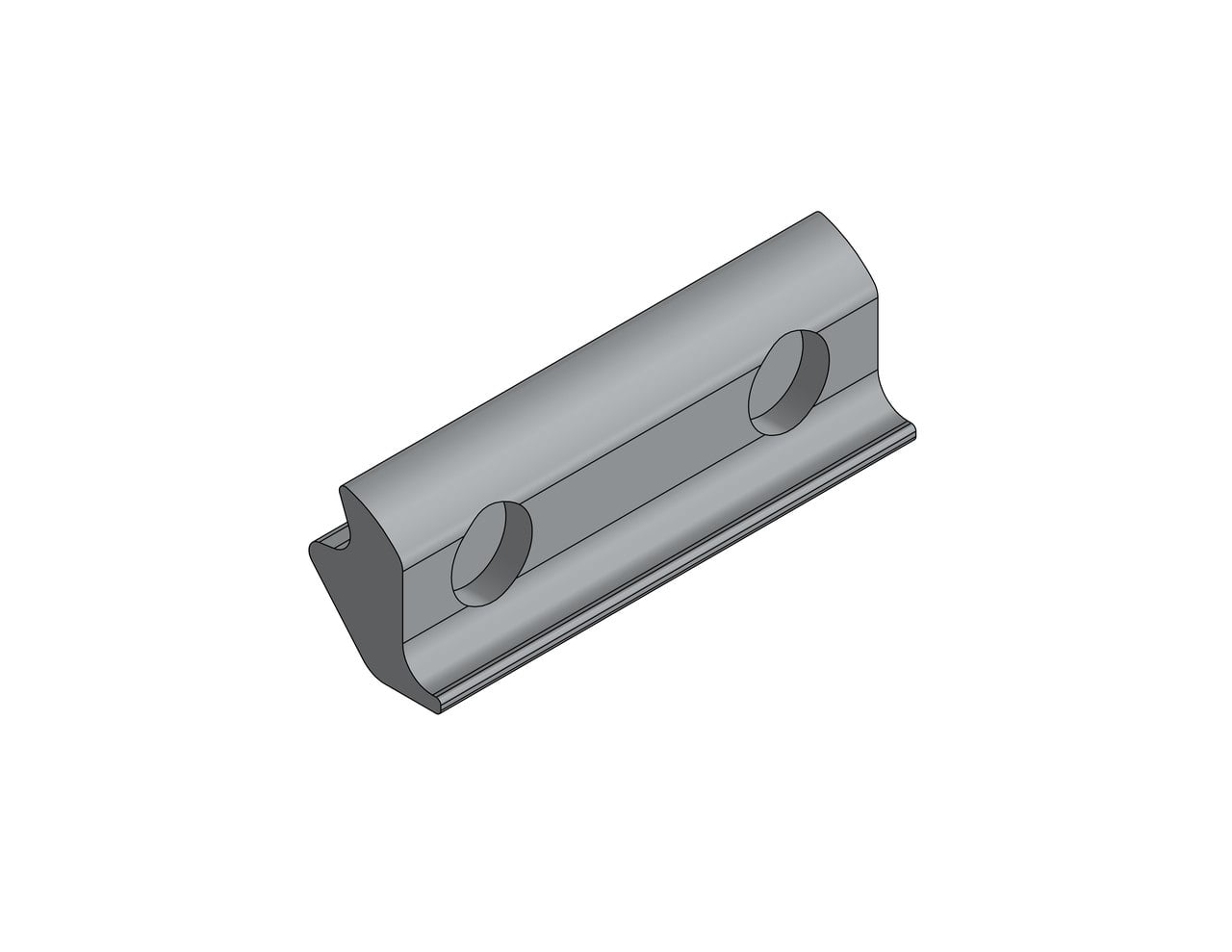
The S-5-K Grip Snow (“K” stands for Klip-Rib®) has a mounting bolt hole to facilitate use of the S-5-VersaClip for the attachment of ColorGard systems. Two different inserts (sold separately) compensate for exact rib dimensions.
Use the K Grip Snow with ColorGard on roofs, such as AEP Span Klip-Rib®, and Klip-Rib® similar profiles: Lysaght® Klip-Lok 406, McElroy Mirage and Metal Sales Clip-Loc.
Unlike other S-5! clamps, the K Grip Snow uses side-bolts rather than setscrews for attachment. The flanged-head bolts also prevent over-compression of the seam and eliminates the need for calibrated tensioning.
K Grip Snow is available for use with S-5! ColorGard. The only difference from the S-5-K Grip is the location of the top bolt hole. It is intended to be used in conjunction with the S-5-KHD when more than one row is required. The KHD should be used at the eave and the K Grip Snow used for additional rows. (Contact [email protected] for design assistance).
Be sure to check out the many other features on the clamp overview page.
Select the insert below that fits your specific roof profile. Each insert has a unique shape to allow for correct fit and provides increased holding strength over other attachment options. If your profile is not listed, please contact us to request a sample for testing.
Concealed-Fix
Place the clamp insert under the shoulder of the rib at the desired location. Position the clamp by rolling it over the rib and snap over the insert. Tighten the flanged bolts at the base of the clamp until they seat tightly to the clamp body. The bolts will engage the divots in the K Grip Snow insert.
A mounting bolt is provided with the K Grip Snow.
*See more detailed installation instructions in the PDF download below.
*S-5! clamps may be moved in the event of initial misplacement. However, due to the ensuing oxidation process which acts as a natural thread lock, we can express no opinion to the performance of a clamp once it has been removed and reinstalled or the ability to remove the clamp after this process has occurred.
Submit your information by clicking the form below, and we’ll get back to you almost immediately.
The answer to this question varies with the load direction, the seam profile, the roof material and the clamp model.
These variables result with a wide range of holding capacities from ±300 lbs (235 kg) to ±4,000 lbs (1800 kg). This is why for critical applications it is important to correctly identify the roof panel, seam type, gauge, etc along with the recommended seam clamp for the specific roof. When used on some “applied cap” architectural type seam styles, S-5! may yield low load-to-failure results as compared with integrated seam profiles. Always check our load table to verify the correct allowable holding strength on your specific roof type.
We perform hundreds of rigorous tensile load tests parallel and normal to the panel seam on various gauges and profiles, the results are tabulated for your convenience here: Load Test Results.
Determining where to place snow retention rows is a common question. The first row is the easiest to answer, but it is really more of a question: "How much snow do you really want to fall off the roof?"
Determining where to place snow retention rows is a common question. We generally recommend that the first row be placed within 12 inches of the panel end. This recommendation is consistent with the Metal Construction Association “Metal Roof Design for Cold Climates” document has some commentary on pages 10 and 11 with respect to the first row of a snow retention system. This industry document recommends, “The first row of units or cross-members should be located close to within 12 in. of the eave end of the panels”. Read more.
Localizing snow guard systems over an entranceway or several of them rather than protecting the entire eave line of a standing seam metal roof can be done in limited cases, but extreme caution is advised.
It is very difficult to predict how snow banks will shear when only a portion of the bank is restrained. It will not, however, shear in a straight line from the end of the snow guard system up to the ridge. Rather, it will shear in a diagonal line toward the ridge. The angle of that line becomes more acute as the slope of the metal roof increases, resulting in a large, wedge-shaped bank of snow being supported by the system -- not a small, rectangular-shaped bank. This is because the snowbank has cohesive strength within itself. The cohesive strength varies with the density and temperature of the snowbank, which always changes. Hence, the angle of shear is impossible to determine with any certainty, yet it if the correct tributary area is improperly anticipated the result may be overload and failure. Read more.
The setscrews, which make a small dimple in the panel seam, optimizing holding strength, are normally tensioned to 115 inch-pounds for test purposes. This is because the tools normal to the trade are rated at this tightening torque. But there are some exceptions to this rule. On some profiles and gauges in steel, screw tension of 115 inch-pounds will not adequately dimple the panel seam. For this reason, some tests are run with higher screw tensions on profiles with increased gauge or thickness.
The appropriate setscrew tension is always published on installation instructions for every clamp. When the tested torque is 115 in. lbs. the recommended installation torque instructs a window between 130 to 150 in. lbs. to be sure the tested torque is reached. When test torque is higher, the corresponding window is also higher.