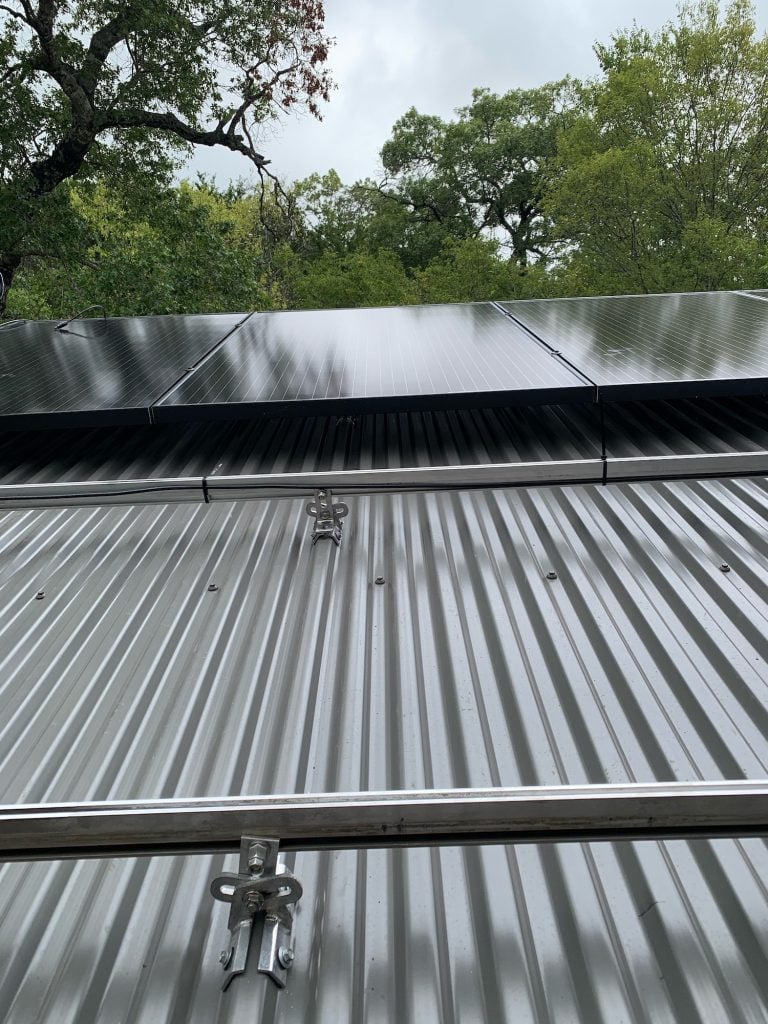
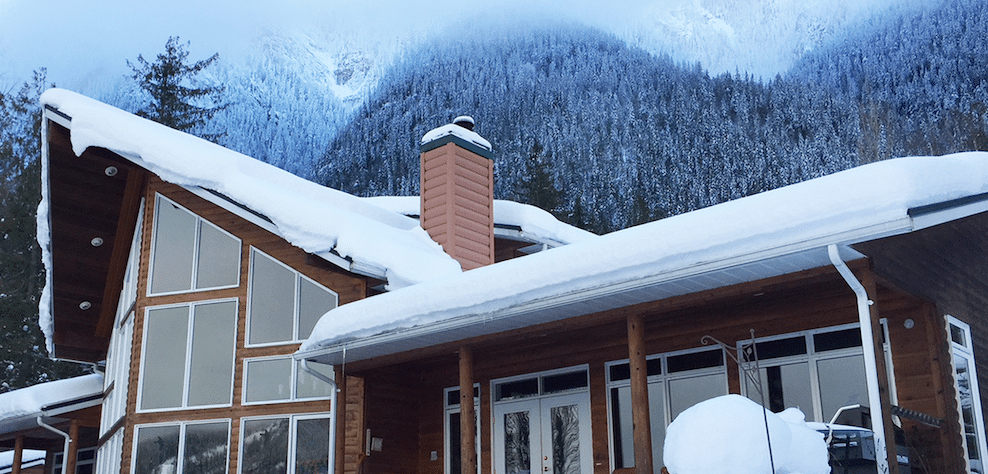
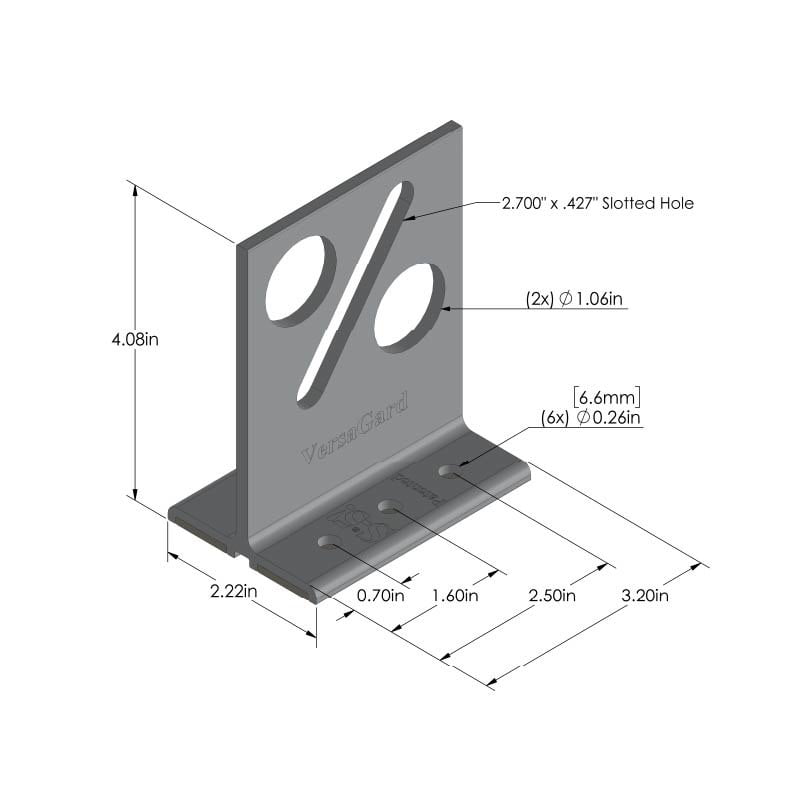
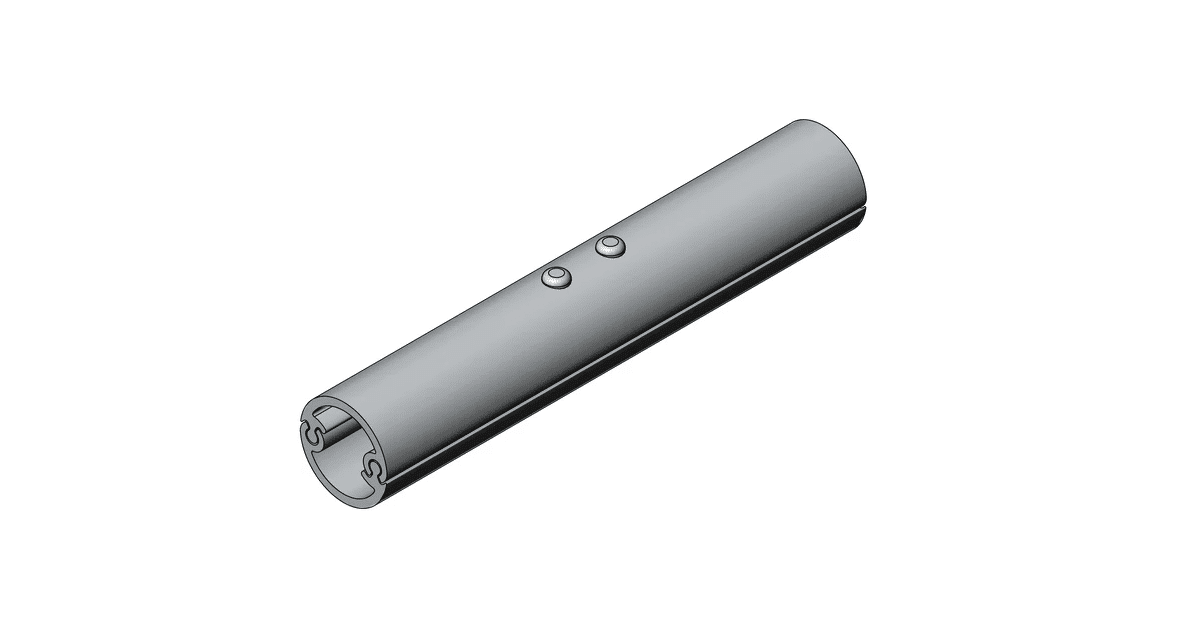
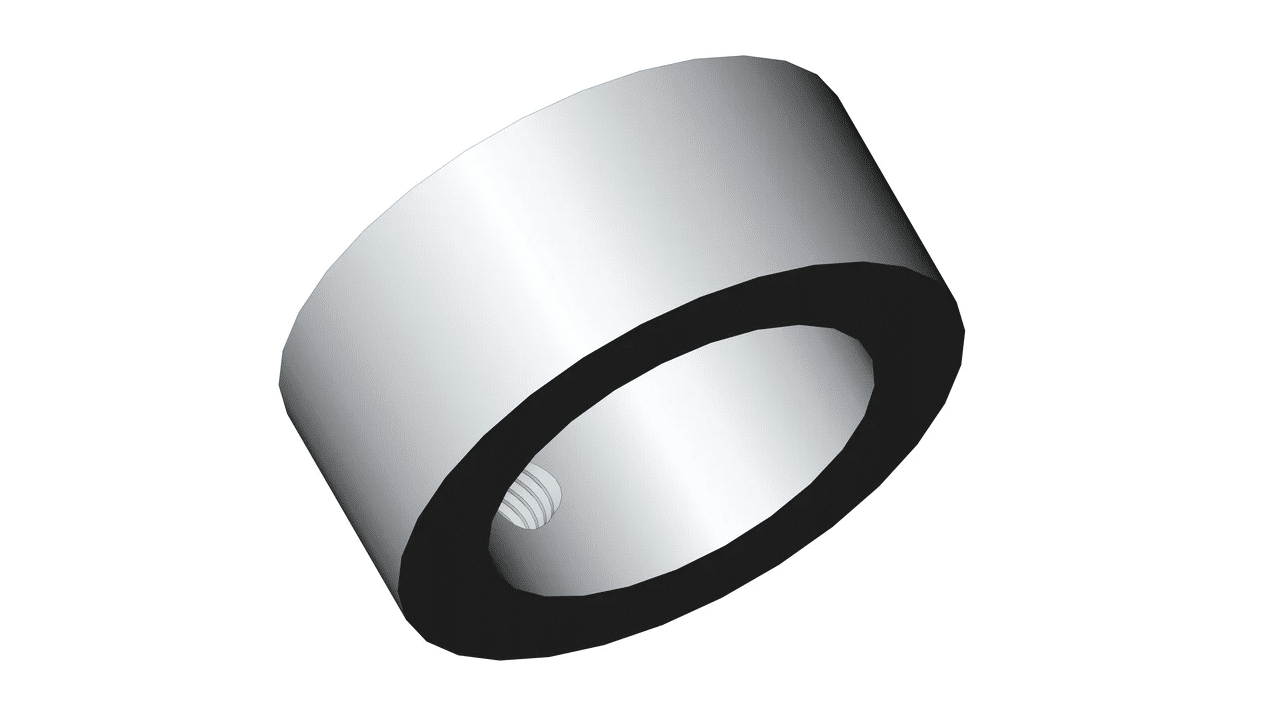
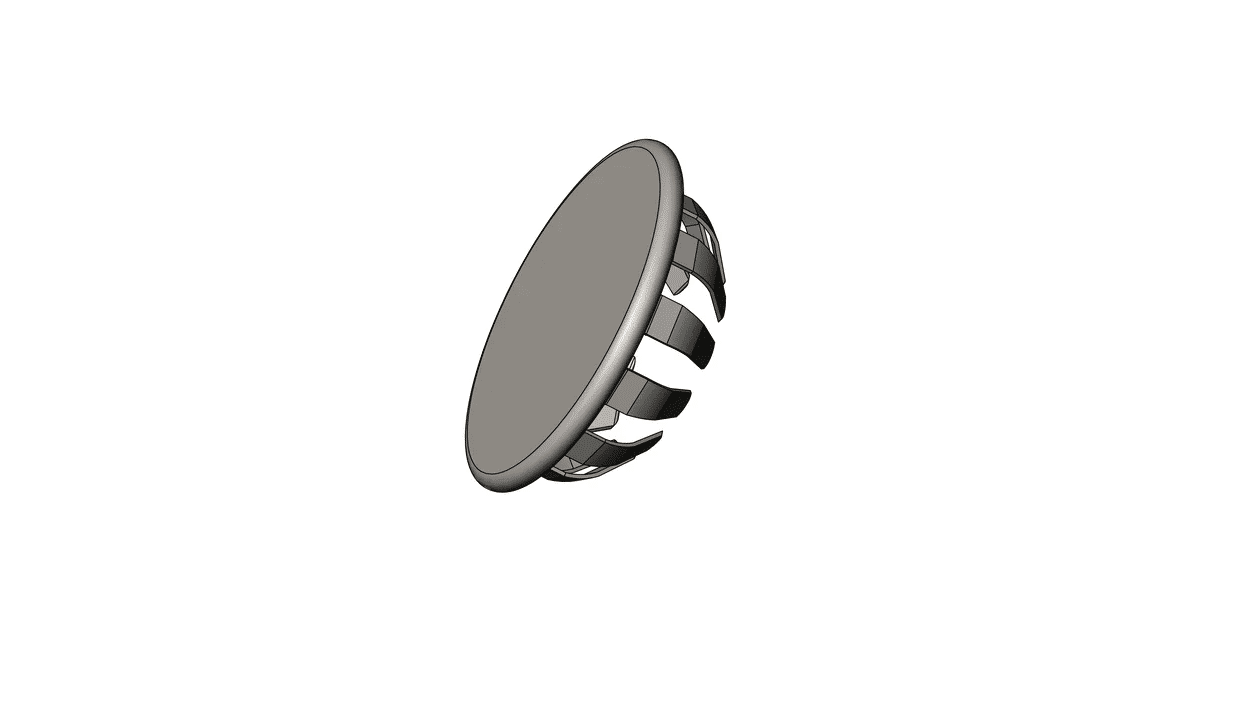
With factory-applied, butyl sealant already in the base, the VersaGard bracket offers a long-term service life free from UV degradation, drying and cracking.
Multiple Applications
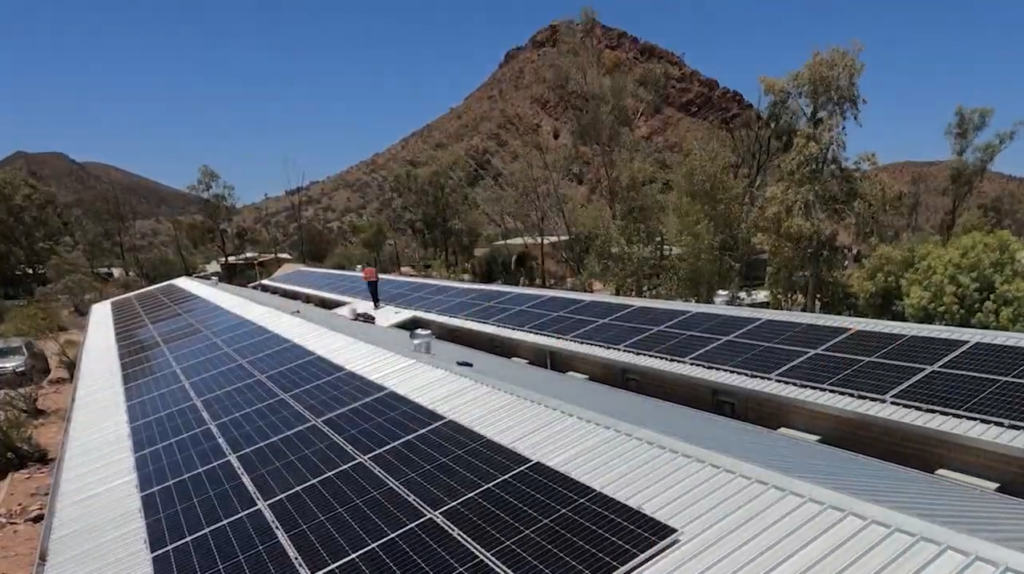
VersaGard is named as such because it offers solutions for both snow retention and PV installation on exposed-fastened metal roofs. For PV applications, see VersaGard™ (solar) bracket.
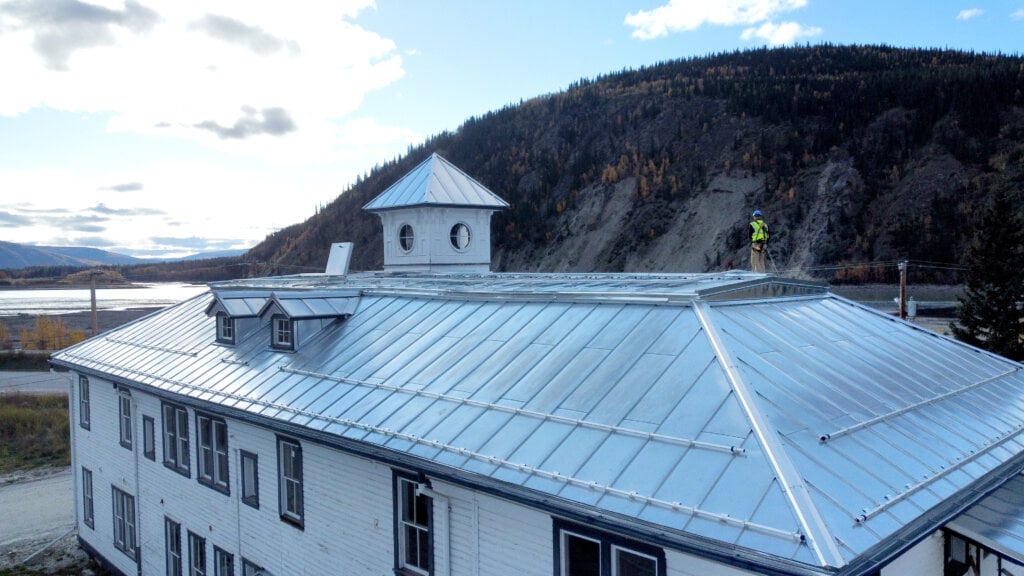
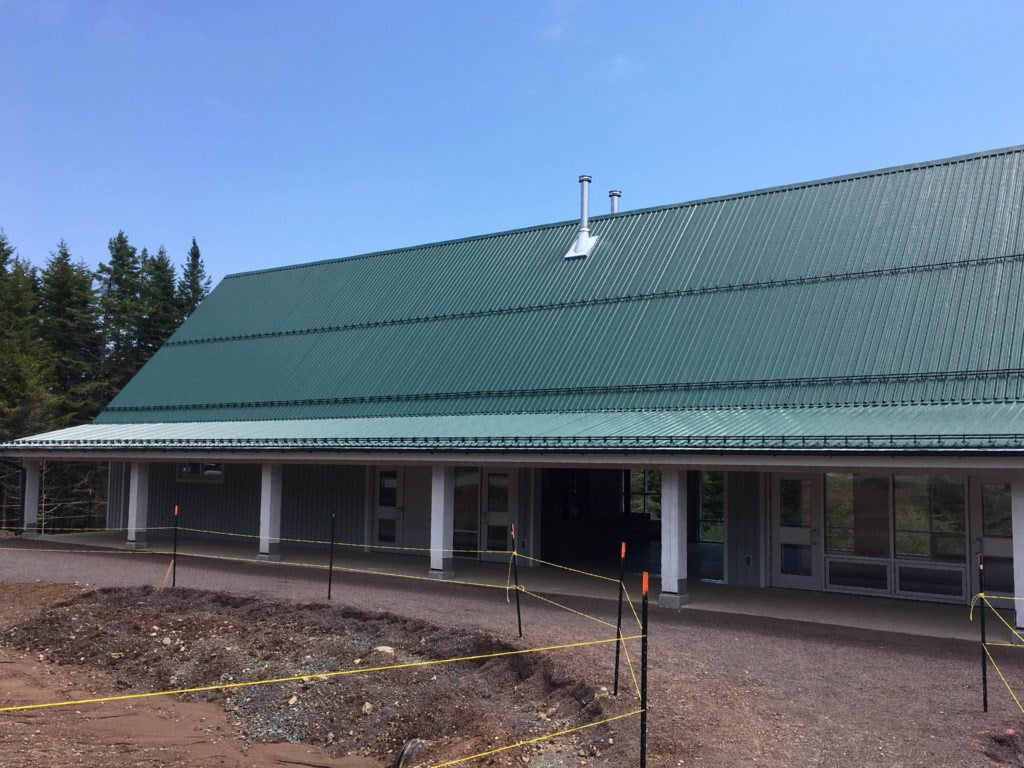
Snow Retention: Choose VersaGard if you are searching for a two-pipe, snow guard system on trapezoidal, exposed- fastened metal roofing. Reduce the risks associated with rooftop avalanches and reduce the need for snow removal maintenance.
Note: When used with snow retention, VersaGard is the product of choice when rib height is 1.0" or below.
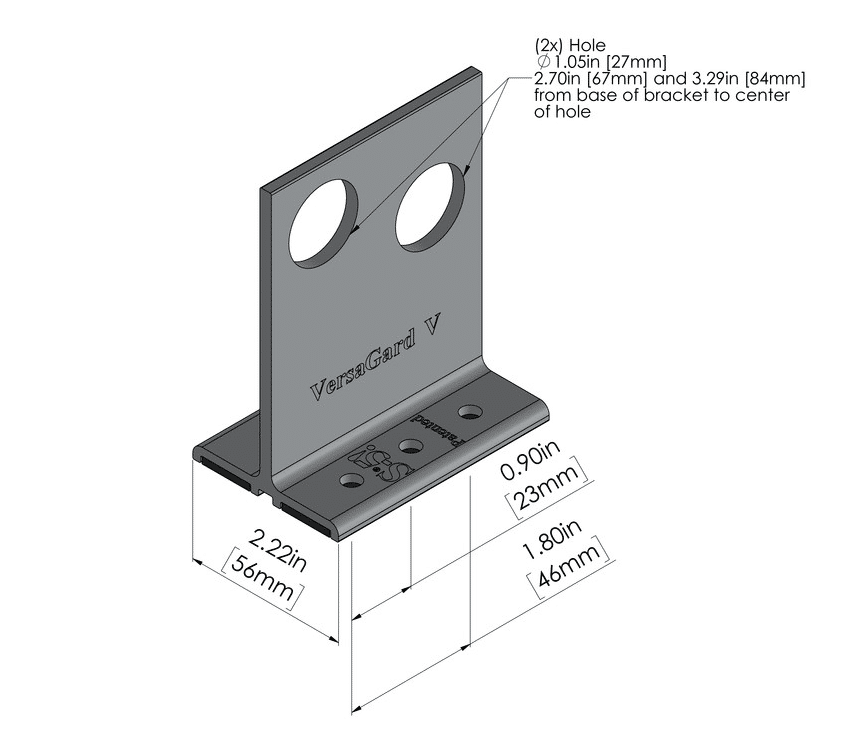
When rib height exceeds 1.5,” use VersaGard V for rib heights up to 2.0”.
VersaGard Snow Guard Benefits:
Be sure to check out the many other benefits on the snow guard overview page.
Exposed-Fastened
Contact your distributor to help you custom-design and price a VersaGard system for your specific roof conditions.
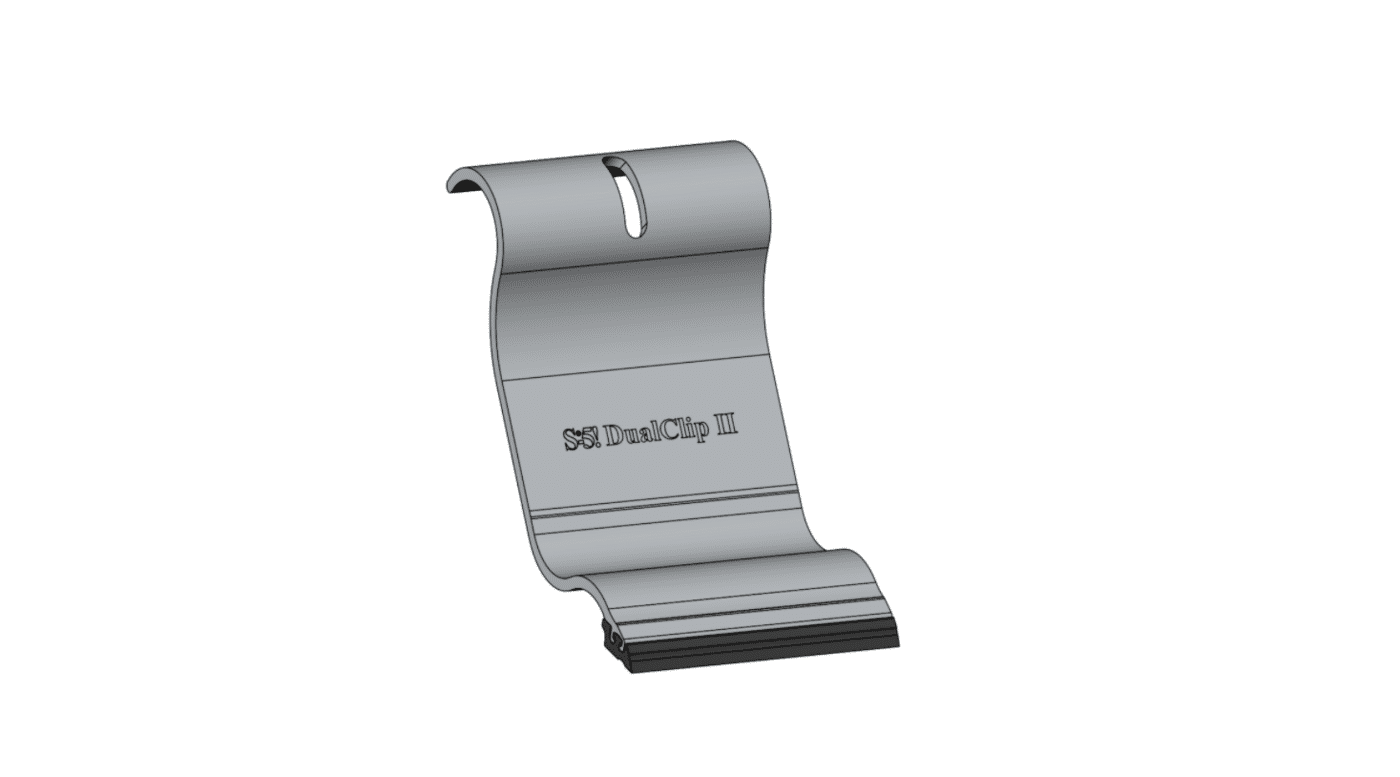
Retards migration of snow and ice beneath crossmembers. Optional with user discretion but recommended on seam heights of 2” and greater. DualClip is assembled to crossmember during or following system installation.
This component is available in two sizes to accommodate various seam-height dimensions.


Submit your information by clicking the form below, and we’ll get back to you almost immediately.
Yes—any product should be—including those sold by other companies. Everything has a failure point, which is why products are tested. The idea, then, is not to expose a product to forces which exceed its known point of failure. These forces are predictable and can be calculated accurately for any application. Ask your distributor for assistance or try our Snow Retention Calculator.
We are often asked how to use the Snow Retention Calculator when using our ColorGard system combined with VersaBracket or CorruBracket for face-fastened roof systems rather than clamps on standing seams. This can be a bit confusing because these products are not listed as options when using the calculator. The reason for this is these brackets have different holding strengths depending upon the substrate or structure, so this information needs to be entered manually. We will describe this process below using our load test charts.
You will be using the ultimate load data for parallel load tests from our website. After this information is entered, the calculator will perform normally, calculating the number of rows required according to the spacing of the brackets entered (although it will appear as "clamps" not "brackets"). It will also refer to the bracket spacing entered as "seam spacing." If you encounter any issues during this process, please reach out to [email protected]. (This is not the entire answer).
Our online Snow Guard Calculator is a very helpful tool when designing a snow retention system but has a max limit of a 12:12 (45º) pitch. In the event the roof is steeper than 12:12, hand-math is required to properly engineer a system. The force of snow on any rooftop can be mathematically calculated—and should be—for any snow guard system. It is the same math that runs our online calculator. (not complete answer).
Often we are asked to provide localized snow guard systems (snow retention systems) over one or more entrance ways rather than protecting the entire eave line of a standing seam metal roof. In limited cases this can be done, but extreme caution is advised.
It is very difficult to predict how snow banks will shear when only a portion of the bank is restrained. It will not, however, shear in a straight line from the end of the snow retention system (also known as snow guard) up to the ridge. This is a certainty. Rather, it will shear in a diagonal line toward the ridge. The angle of that line becomes more acute as the slope of the metal roof increases, resulting in a large, wedge-shaped bank of snow being supported by the system -- not a small, rectangular shaped bank. This is because the snow bank has cohesive strength within itself. The cohesive strength varies with the density and temperature of the snow bank, which always changes. Hence, the angle of shear is impossible to determine with any certainty. (Not full answer)