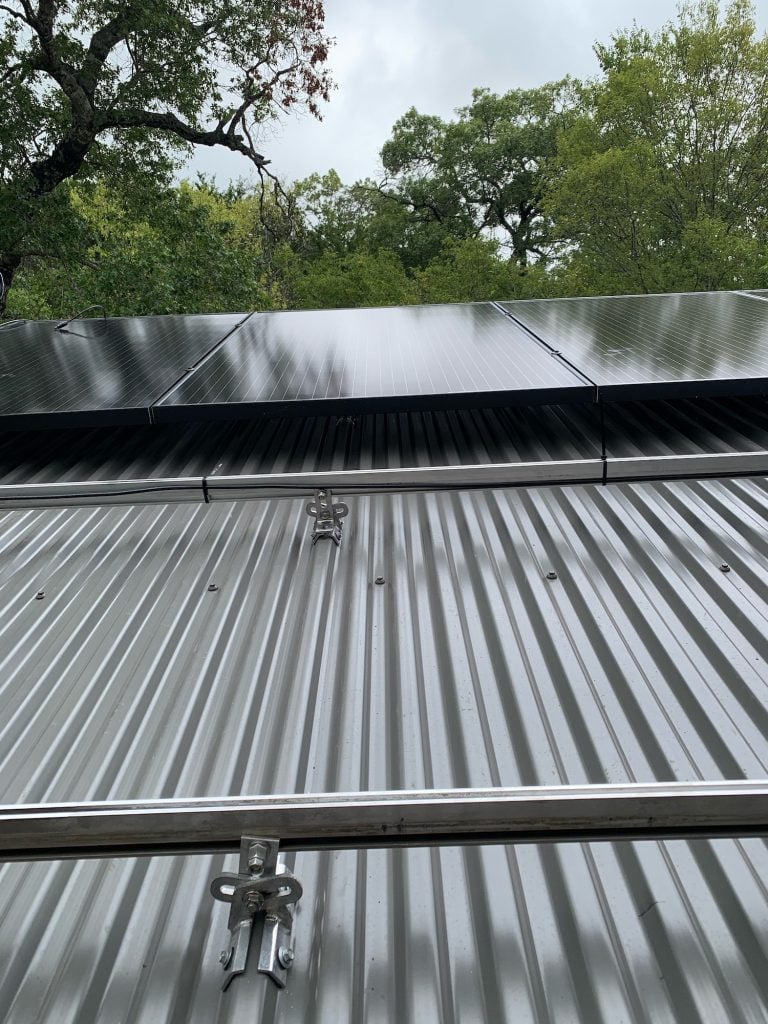
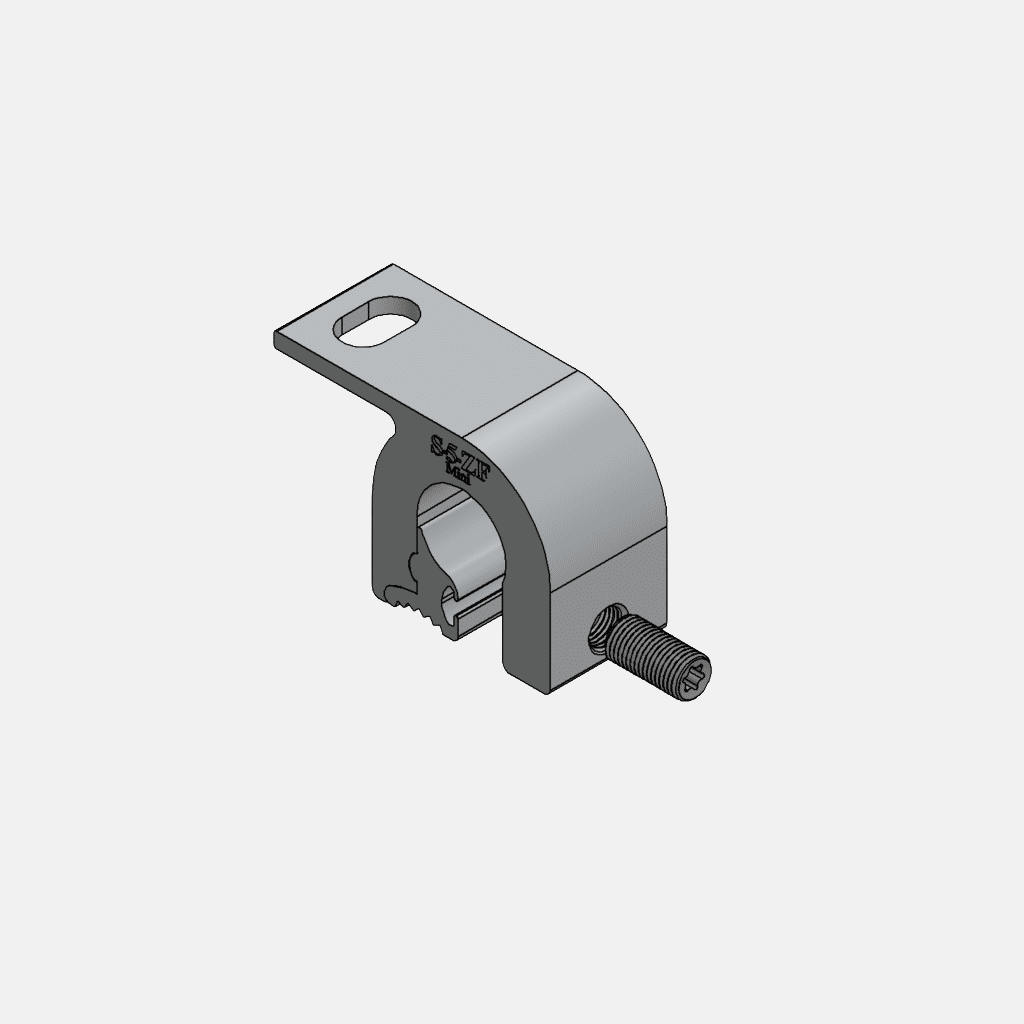
A nut and bolt are often the required connection for certain utilities or bottom-bolted PV rails (Schletter, K-2, Everest) to a standing seam clamp. Choose the S-5-ZF Mini (“F” for “Flange”) for an economical, non-penetrating standing seam metal roof (SSMR) clamp for most “bulb” seam configurations such as ZipRib, BEMO and KalZip.
The slotted hole in the flange allows minor adjustment, making the ZF Mini ideal for walkways, module-level power electronics and a myriad of other utility mountings.
Stainless steel lock-nuts and several bolt sizes are sold separately.
The ZF Mini has a single setscrew for medium or light-duty applications, such as solar or satellite dish mounting.
Please refer to the load testing of the S-5-Z Mini for holding capacities of this clamp on different materials and seam specifics.
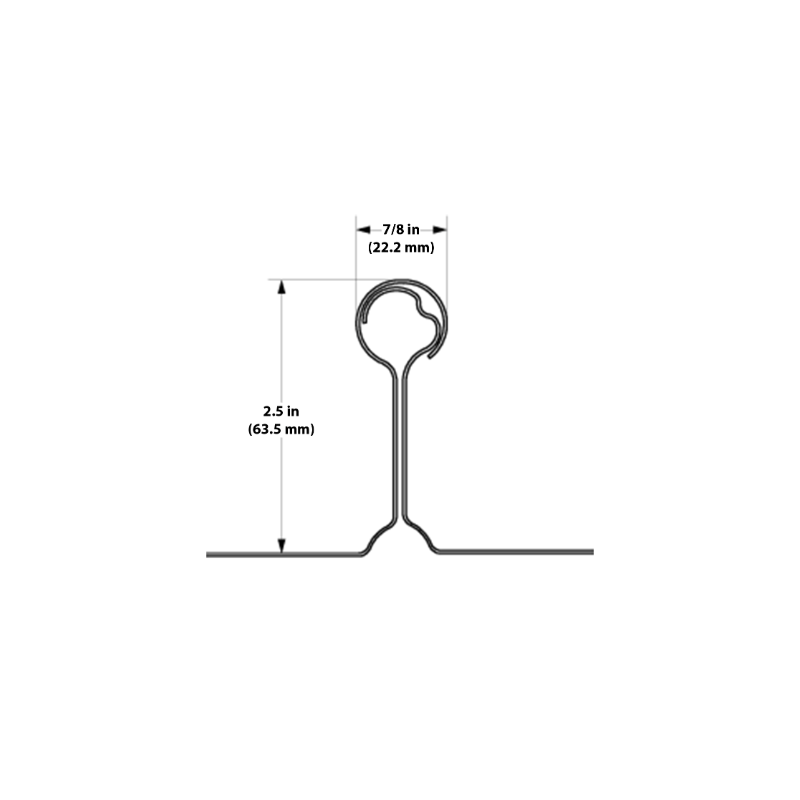
Choose the ZF Mini to mount a variety of utilities with a round “bulb” seam configuration and seam diameters ≤ 7/8” (22 mm).
Be sure to check out the many other features on the clamp overview page.
Bulb-Type Standing Seam
Using the ergonomic finger grip “tail” of the insert, position the insert at the desired location against the base of the seam and just below the bulbous portion (either side of the seam). Rotate the clamp into place over both the seam and insert. Hold this assembly in place with one finger, while tightening the roundpoint Torx Drive (T30) setscrew to the specified tension. The slotted thru-hole in the flange accommodates bolt diameters of up to ⅜” (10 mm).
*See more detailed installation instructions in the PDF download below.
*S-5! clamps may be moved in the event of initial misplacement. However, due to the ensuing oxidation process which acts as a natural thread lock, we can express no opinion to the performance of a clamp once it has been removed and reinstalled or the ability to remove the clamp after this process has occurred.
Submit your information by clicking the form below, and we’ll get back to you as soon as possible.
Our standard test procedures are to test the mini (one setscrew) clamps with negative load normal to seam, and standard (two setscrew) clamps with load parallel to seam. We have performed numerous parallel to seam datum tests on mini clamps and concluded from engineering analysis the mini clamp is (conservatively) obtaining more than ½ the strength of the standard clamps. In fact, the majority of the datum testing indicates the strength of a mini is closer to 2/3 the strength of a standard clamp. In due course, we are adding certified lab testing in this load direction for mini clamps.
In the interim, should certification of the load application parallel to seam be critical to your application, we suggest using the standard (two setscrew) design.
All S-5! clamps undergo rigorous mechanical tensile load testing. We typically test in two load directions: Negative load normal-to-seam testing (pulling-up), and parallel-to-seam testing (drag load). We actually developed these test protocols back in 1992 as ASTM has no prescribed test procedures for this type of testing. For more on our testing protocols and results, visit this link and check out our video.
The answer to this question varies with the load direction, the seam profile, the roof material and the clamp model.
These variables result with a wide range of holding capacities from ±300 lbs (235 kg) to ±4,000 lbs (1800 kg). This is why for critical applications it is important to correctly identify the roof panel, seam type, gauge, etc along with the recommended seam clamp for the specific roof. [ link-- Clamp-to-seam tool] When used on some “applied cap” architectural type seam styles, S-5! may yield low load-to-failure results as compared with integrated seam profiles. Always check our load table to verify the correct allowable holding strength on your specific roof type.
When properly used, they do not. Proper use may in some cases involve exact clamp placement. The roof panel grows and shrinks dimensionally with temperature change. This movement is very minimal with shorter roof lengths, but can become significant with long roof lengths. When roof panel length is greater than 30 ft (9m), standing seam metal roofs are often designed to respond thermally with dimensional change along the length of the panels. This is accomplished at the roof panel-to-its attachment clip interface or within the attachment clip itself.
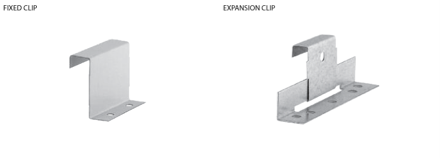
Most pre-engineered metal buildings and other clip designs utilize dual-component clips when roof panels are above a certain length. Within the dual-component clip (often called “thermal clip” or “expansion clip”), the top portion moves thermally with the roof panel, while the lower portion (fastened to structure) is stationary; the two portions are joined with a slip joint.

When attaching to this type of standing seam metal roof, the S-5! clamp can be attached anywhere along the seam whether at a clip location or between clips.
Read more about how to avoid excessive thermally cycling.