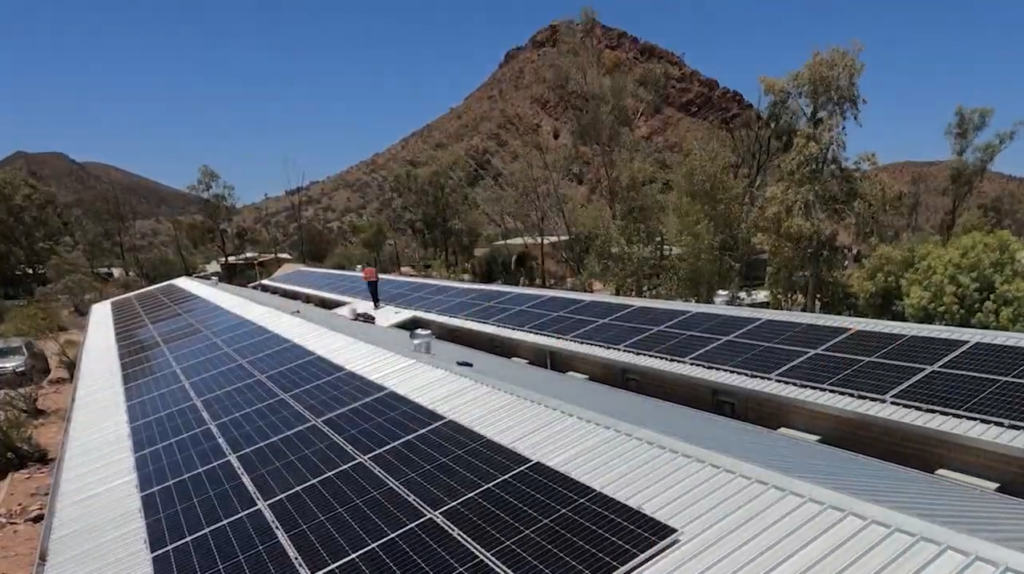
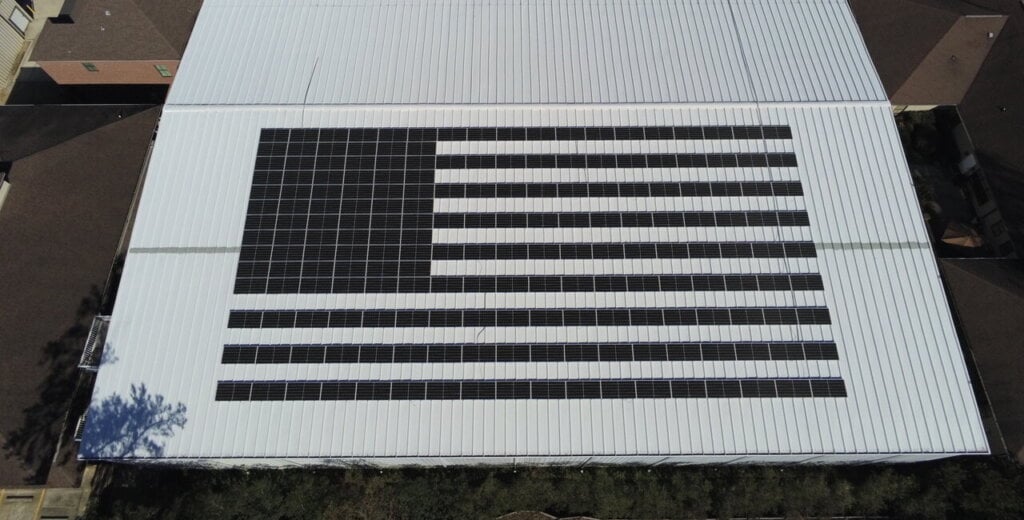
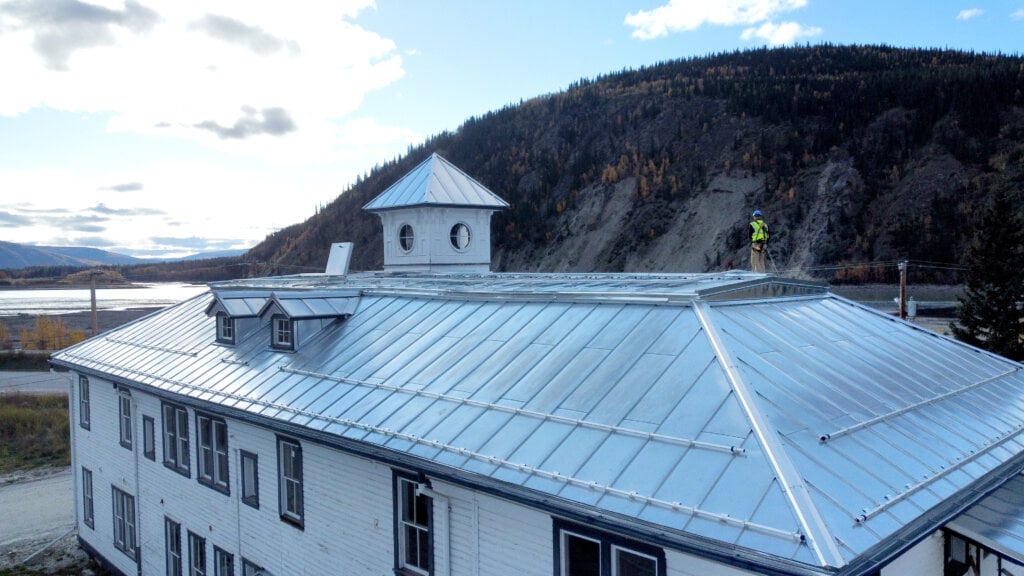
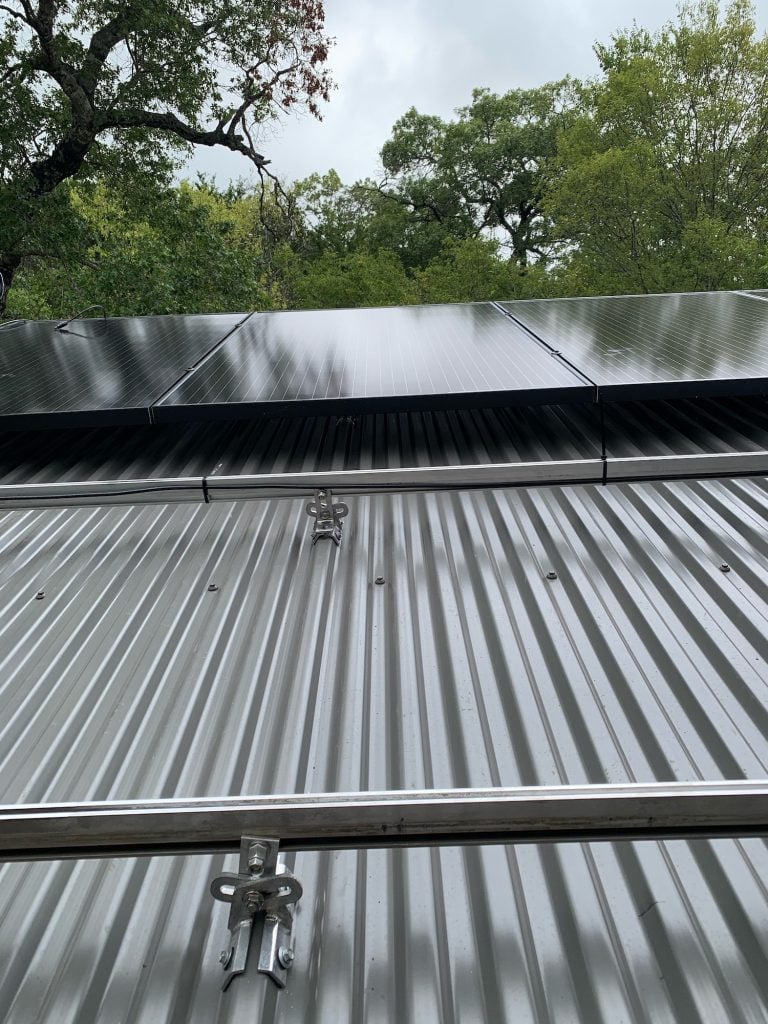
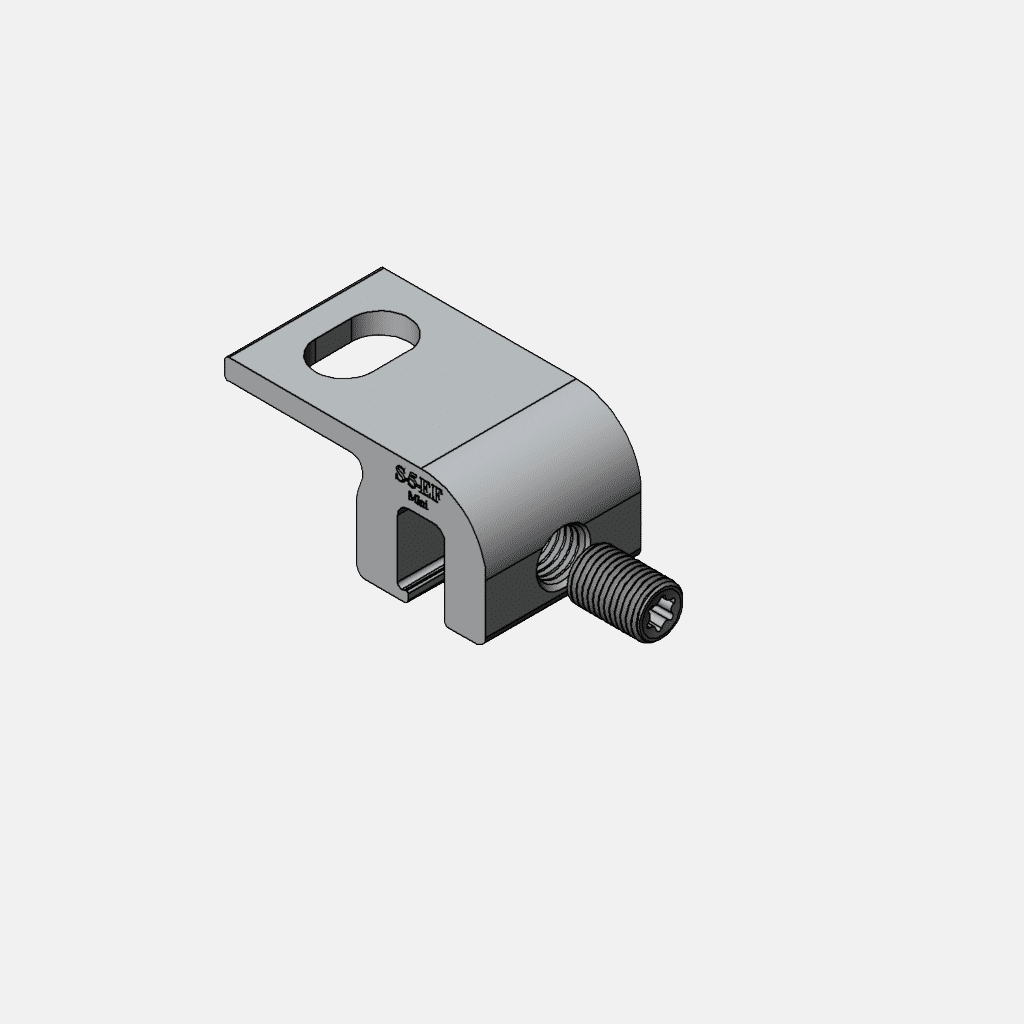
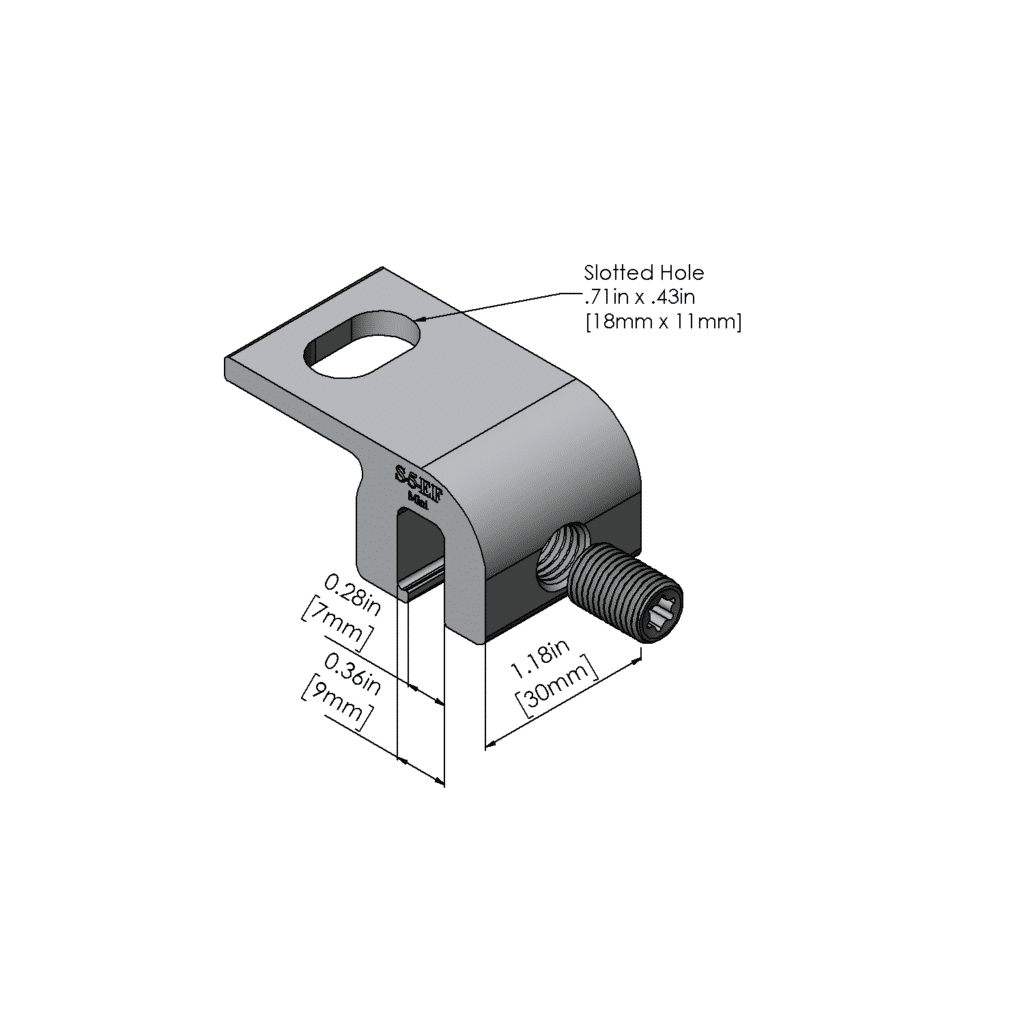
Sometimes you need a nut-and-bolt connection to the clamp rather than threading the bolt into the clamp directly. This is why we created the S-5-EF Mini clamp – the right choice for a traditionally dimensioned, double- folded standing seam. The EF Mini ( “EF” is for European Flange) is an economical, non-penetrating, standing seam metal roof (SSMR) clamp. With a slotted hole in the flange, the EF is ideal for the attachment of bottom-mount solar rails and a broad spectrum of other utility mountings. Stainless steel nuts and several bolt sizes are sold separately.
The EF Mini has a single setscrew for medium or light-duty applications, such as solar or satellite dish mounting.
Please refer to the load testing of the S-5-E Mini for values of this clamp.
Choose the EF Mini to mount a variety of utilities with nominal seam dimensioning (<½” seam fold (13 mm) to your double-folded, standing seam metal roof.
Be sure to check out the many other features on the clamp overview page.
Standing Seam Double-Fold
Place the clamp at the desired location on the seam with the lower “lip” of the clamp throat beneath the seam fold. Tighten the roundpoint Torx Drive (T30) setscrew to the specified tension. The slotted thru-hole in the flange accommodates bolt diameters of up to ⅜” (10 mm). (Bolt and nut sold separately as needed).
*See more detailed installation instructions in the PDF download below.
*S-5! clamps may be moved in the event of initial misplacement. However, due to the ensuing oxidation process which acts as a natural thread lock, we can express no opinion to the performance of a clamp once it has been removed and reinstalled or the ability to remove the clamp after this process has occurred.
Submit your information by clicking the form below, and we’ll get back to you almost immediately.
The answer to this question varies with the load direction, the seam profile, the roof material and the clamp model.
These variables result with a wide range of holding capacities from ±300 lbs (235 kg) to ±4,000 lbs (1800 kg). This is why for critical applications it is important to correctly identify the roof panel, seam type, gauge, etc along with the recommended seam clamp for the specific roof. When used on some “applied cap” architectural type seam styles, S-5! may yield low load-to-failure results as compared with integrated seam profiles. Always check our load table to verify the correct allowable holding strength on your specific roof type.
All S-5! clamps undergo rigorous mechanical tensile load testing. We typically test in two load directions: Negative load normal-to-seam testing (pulling-up), and parallel-to-seam testing (drag load). We actually developed these test protocols back in 1992 as ASTM has no prescribed test procedures for this type of testing. For more on our testing protocols and results, visit this link and check out our video.
All S-5! clamps undergo rigorous mechanical tensile load testing. We typically test in two load directions: Negative load normal-to-seam testing (pulling-up), and parallel-to-seam testing (drag load). We actually developed these test protocols back in 1992 as ASTM has no prescribed test procedures for this type of testing. For more on our testing protocols and results go to [.......] on our website and check out our video on this subject. . [Insert video on how we test our clamps]
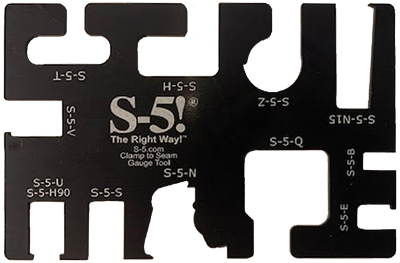
You can request our Clamp-to-Seam Gauge Tool from your Authorized S-5! Distributor or directly from S-5! The most common seam geometries are included within this fitment tool and it is cost-free. Keep it for future fitment checking. Request your tool here.

If unsuccessful using the gauge tool, the fastest and easiest way to find the clamp you need is to visit our CLAMP TO SEAM TOOL on our website which takes you through a pictorial process of determining the proper clamp.
When you first get to this page it will ask you if you know the manufacturer and specific profile of your roof or if you don't know these things. Once you have selected the latter option, you will be brought to a page of diagrams that easily let you identify the most common panel seams found in the market today and the corresponding clamps that should fit that seam profile.